🌿 Mulberry
Morus spp.
Mulberry is the common name for several species of fruit-producing trees in the genus Morus. Mulberry trees are valued for their sweet fruits, nutritious leaves, ecological importance, and long association with silkworm cultivation.
🌿 Botanical Information
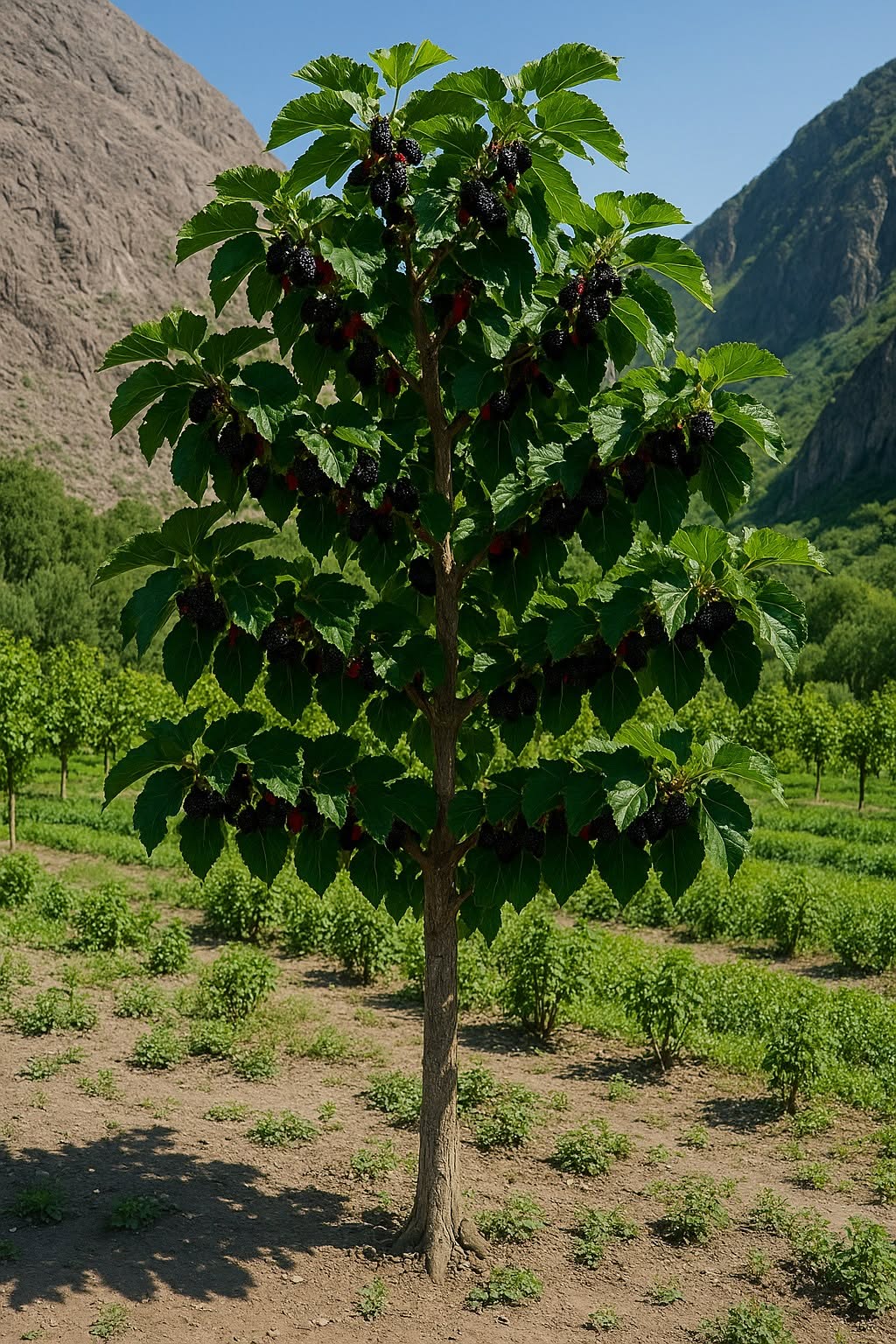
Mulberries belong to the genus Morus, which is part of the family Moraceae. The genus contains several species and naturally occurring forms that are cultivated in different parts of the world.
Mulberry trees are deciduous woody plants. Their leaves are particularly important as food for the larvae of silkworms in traditional silk production.
Scientific Classification
- Kingdom: Plantae
- Family: Moraceae
- Genus: Morus
- Common name: Mulberry
- Plant type: Deciduous tree
Several commonly cultivated mulberries include white mulberry (Morus alba), black mulberry (Morus nigra), and red mulberry (Morus rubra).
🌳 Description of the Mulberry Tree
Mulberry trees are generally medium-sized deciduous trees, although their size and growth habit vary according to species, variety, climate, and growing conditions.
Mature trees can develop broad crowns with many branches. Young branches are usually more flexible and may have a different appearance from older woody branches.
The tree produces distinctive leaves and small flowers followed by clusters of fleshy fruits.
🍃 Mulberry Leaves
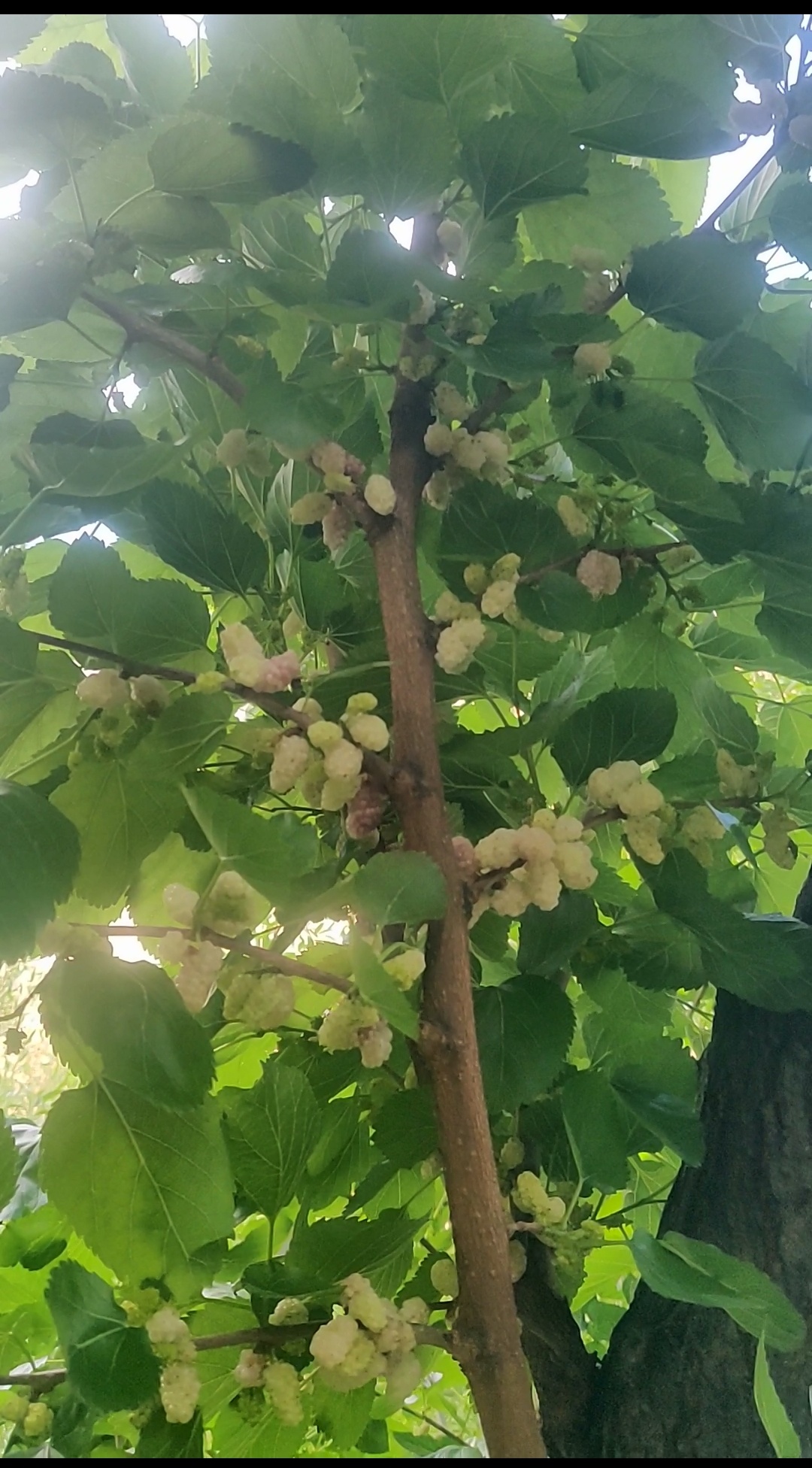
Mulberry leaves are alternate and can vary considerably in shape. Some leaves are simple and entire, while others may have lobed margins, particularly on vigorous young shoots.
The leaves are generally green during the growing season and provide an important food source for silkworm larvae.
🌸 Mulberry Flowers
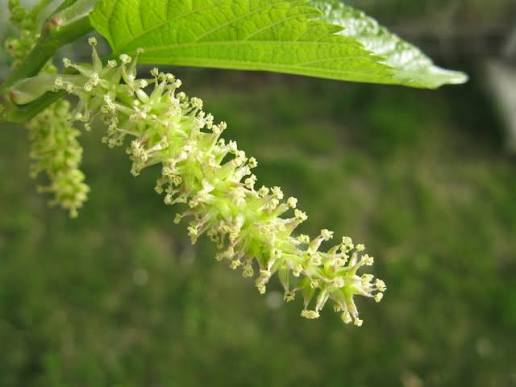
Mulberry flowers are generally small and inconspicuous compared with the flowers of ornamental plants.
Flowers are produced in clusters and may occur separately as male and female flowers, depending on the species and tree.
Pollination allows female flowers to develop into the familiar mulberry fruit clusters.
🫐 Mulberry Fruit
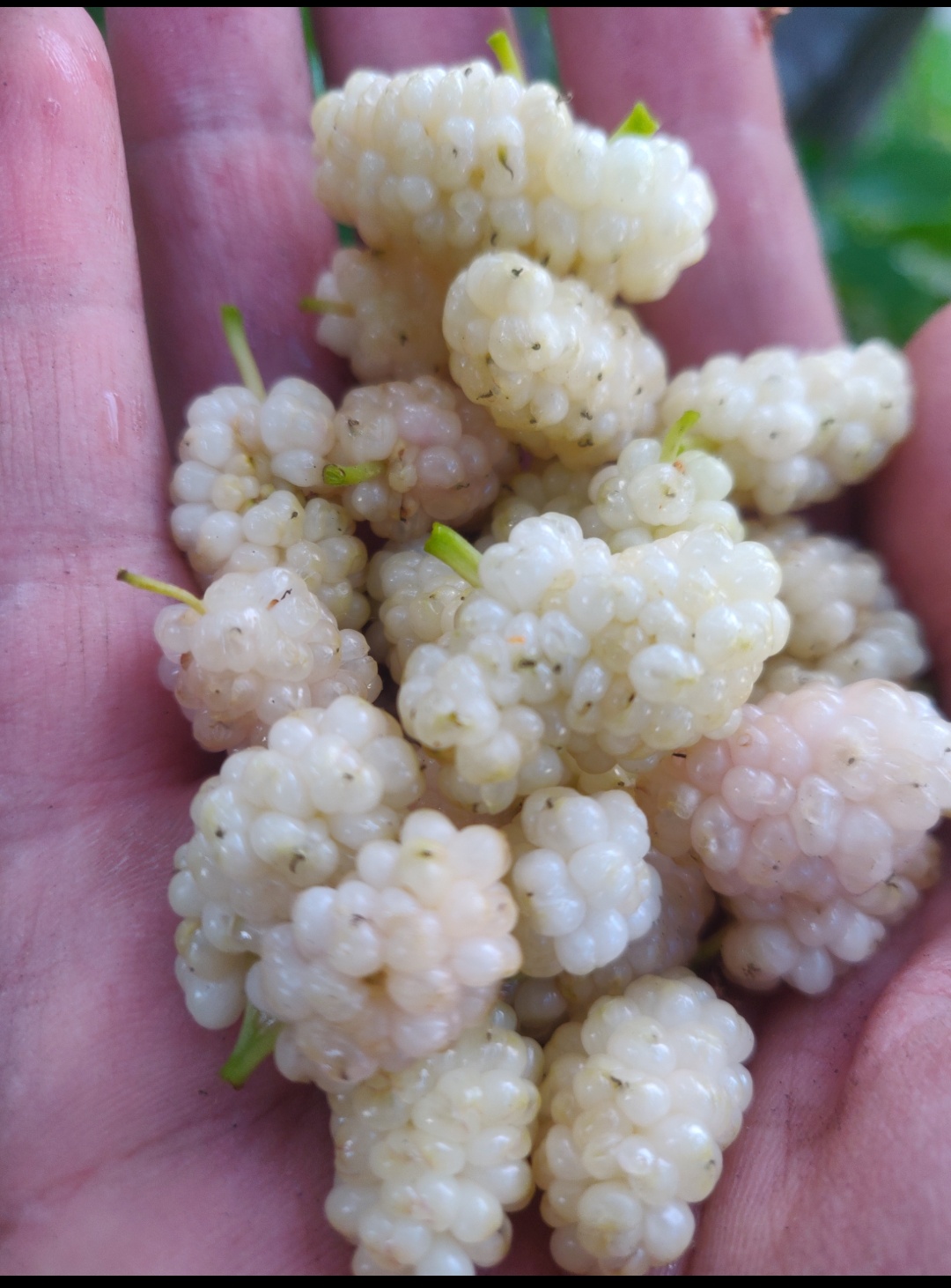
Mulberry fruits are composed of many small fruit units clustered together. They are usually elongated or cylindrical and resemble small berries.
Depending on species and variety, mature fruits can be white, pink, red, dark purple, or nearly black.
Ripe mulberries are generally soft and juicy and can have a sweet or pleasantly acidic flavour.
🌿 Common Mulberry Species
White Mulberry — Morus alba
White mulberry is widely cultivated and has been important in sericulture because its leaves are a major food source for domesticated silkworms.
Black Mulberry — Morus nigra
Black mulberry is known for its dark, usually purple-black ripe fruits and is traditionally cultivated for fruit.
Red Mulberry — Morus rubra
Red mulberry is native to eastern and central parts of North America and produces edible fruits that become darker as they mature.
🌍 Origin and Distribution
Different mulberry species have different native distributions. Species of Morus are associated with regions of Asia, Europe, and North America.
White mulberry has a long history of cultivation in Asia and was introduced into many other parts of the world.
Mulberries are now grown in many temperate and subtropical regions.
📜 History of Mulberry
Mulberry trees have been cultivated for thousands of years, particularly in connection with silk production.
The leaves of white mulberry became especially important in traditional sericulture because they provide food for the larvae of the domesticated silkworm.
Mulberry cultivation subsequently spread to many regions where the trees were grown for fruit, shade, livestock feed, and ornamental purposes.
🦋 Mulberry and Silk Production
One of the most important historical relationships between humans and mulberry trees is their connection with silkworm farming.
The domesticated silkworm, Bombyx mori, feeds primarily on mulberry leaves during its larval stage.
Because of this relationship, mulberry cultivation became an essential part of traditional sericulture in many Asian regions.
The relationship between mulberry trees and silkworms is one of the best-known examples of a plant forming an important part of a traditional agricultural production system.
📚 Cultural and Agricultural Importance
Mulberry trees have played important roles in agriculture, food traditions, silk production, and rural landscapes.
In areas where sericulture developed, mulberry cultivation became closely associated with rural livelihoods and the production of silk.
The fruits have also been valued as a seasonal food and are eaten fresh or preserved in different culinary traditions.
🥗 Nutritional Value
Fresh mulberries contain water, carbohydrates, dietary fibre, vitamins, minerals, and naturally occurring plant compounds.
Their dark-coloured varieties can contain anthocyanins and other polyphenolic compounds that contribute to their colour.
Nutritional composition varies among species, varieties, maturity stages, and growing conditions.
❤️ Health Research
Mulberries have attracted scientific interest because they contain dietary fibre and various naturally occurring phytochemicals.
Research has investigated compounds found in mulberry fruits and leaves, including polyphenols, flavonoids, anthocyanins, and other plant constituents.
Eating a variety of fruits and plant foods can contribute to a balanced diet. However, mulberry products should not be presented as a substitute for medical treatment.
🧪 Natural Plant Compounds
Mulberries contain naturally occurring compounds such as anthocyanins, flavonoids, phenolic compounds, and other phytochemicals.
Anthocyanins are responsible for much of the red, purple, and dark coloration seen in ripe fruits of some mulberry varieties.
The concentration of these compounds varies according to species, cultivar, maturity, and environmental conditions.
🍽️ Culinary Uses
Ripe mulberries are used in a variety of foods and beverages.
- Eaten fresh
- Jams and preserves
- Jellies
- Fruit syrups
- Juices and beverages
- Desserts
- Fruit sauces
- Dried fruit
Because ripe mulberries are soft and perishable, they are often processed soon after harvesting.
🌱 Mulberry Cultivation
Mulberry trees are generally adaptable plants and can grow in a range of soils when drainage and moisture conditions are suitable.
They generally benefit from good sunlight and adequate water during active growth.
Mulberries can be cultivated for fruit, shade, ornamental value, livestock feed, or leaf production for sericulture.
☀️ Climate Requirements
Different mulberry species vary in their tolerance of temperature and climate conditions.
Many mulberry trees grow well in warm temperate and subtropical environments and can tolerate a range of conditions once established.
Young trees may require protection from extreme environmental conditions, depending on the local climate.
🌱 Mulberry Propagation
Mulberry trees can be propagated from seeds, cuttings, and other vegetative methods.
Vegetative propagation is useful when growers want to maintain the characteristics of a particular cultivar.
Propagation methods vary according to species, cultivar, and local horticultural practices.
✂️ Pruning and Tree Care
Pruning can be used to shape mulberry trees, remove damaged branches, control size, and make harvesting easier.
The appropriate pruning method depends on whether the tree is being grown primarily for fruit, shade, ornamental purposes, or leaf production.
🌍 Ecological Importance
Mulberry trees can provide food and shelter resources for a variety of organisms.
Their fruits can be eaten by birds and other animals, while the foliage can support herbivorous insects.
Mulberry trees can therefore contribute to biodiversity when incorporated into diverse landscapes.
🐦 Mulberry Trees and Wildlife
Ripe mulberries can attract birds and other fruit-eating animals.
The tree's foliage can also serve as a food resource for various insects.
The ecological value of a mulberry tree depends on its species, location, surrounding vegetation, and local wildlife community.
🔎 How to Identify a Mulberry Tree
Mulberry identification should be based on several characteristics rather than fruit colour alone.
- Deciduous woody tree
- Alternate leaves
- Leaves may be entire or lobed
- Small inconspicuous flowers
- Clusters of fleshy fruit
- Fruit may mature white, red, purple, or black
- Broad spreading crown in mature trees
Because several Morus species can look similar, identification may require examination of leaves, fruits, flowers, bark, and geographic distribution.
🤍 White Mulberry
White mulberry, Morus alba, is widely cultivated and is particularly important in traditional silk production.
Despite its common name, its ripe fruits are not always white. Depending on the variety, fruits may become pink, red, or dark purple when mature.
🖤 Black Mulberry
Black mulberry, Morus nigra, is valued particularly for its dark, juicy fruit.
Its fruits are generally deep purple to nearly black when ripe and are commonly eaten fresh or used in preserves and other foods.
❤️ Red Mulberry
Red mulberry, Morus rubra, is native to eastern and central North America.
Its fruits can develop from lighter colours to red or dark purple as they mature and are eaten by both humans and wildlife.
🧵 Importance in Sericulture
Mulberry leaves are central to traditional sericulture because silkworm larvae feed primarily on mulberry foliage.
Farmers involved in silk production cultivate suitable mulberry varieties to provide a reliable supply of leaves.
This makes mulberry an important agricultural plant beyond its role as a fruit tree.
🌳 Environmental Importance
Mulberry trees can contribute to green spaces, agricultural landscapes, and wildlife habitat.
Their fruits provide seasonal food for wildlife, while mature trees can offer shade and structural habitat.
Planting a diversity of native and appropriate tree species is generally more beneficial for local ecosystems than relying on a single tree species.
🌱 Conservation and Genetic Diversity
Maintaining diversity among mulberry species and cultivated varieties can be valuable for agriculture and future breeding.
Different mulberries possess different characteristics related to fruit quality, leaf production, climate adaptation, and resistance to environmental stresses.
Conserving traditional varieties can also preserve agricultural knowledge and regional plant diversity.
⚠️ Important Information
Ripe mulberry fruits are commonly consumed as food and can be part of a balanced diet.
Scientific research on mulberry leaves, fruits, and extracts should not be interpreted as proof that mulberry products treat or cure diseases.
If using concentrated herbal or leaf preparations, consult a qualified healthcare professional, particularly when taking medicines or managing a health condition.
🌿 Why Is Mulberry Important?
Mulberry is an important plant because of its nutritional, agricultural, ecological, and historical value.
- Produces edible and nutritious fruits
- Provides food for birds and other wildlife
- Supports biodiversity
- Important food source for silkworms
- Has a long history in silk production
- Can provide shade and green cover
- Includes several useful cultivated species
- Valuable for agricultural and genetic diversity
🌿 Mulberry at a Glance
- Common name: Mulberry
- Scientific genus: Morus
- Family: Moraceae
- Plant type: Deciduous tree
- Fruit: Clustered fleshy fruit
- Leaves: Simple, alternate, sometimes lobed
- Major uses: Fruit, silk production, shade, livestock feed, cultivation
- Important relationship: Mulberry leaves are a major food source for silkworms