🧡 Sea Buckthorn
Scientific Name: Hippophae rhamnoides L.
🌿 Introduction
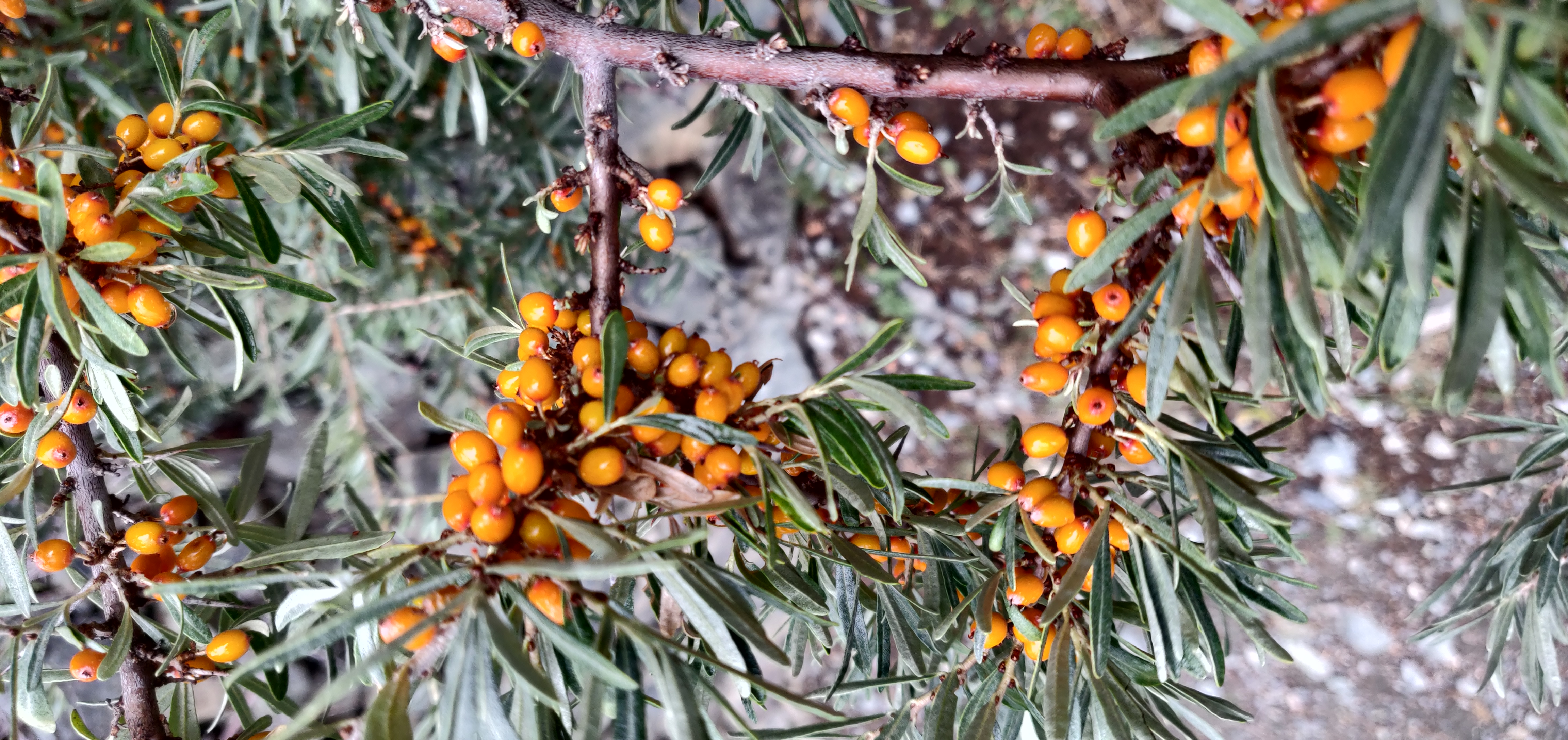
Sea Buckthorn is a deciduous shrub belonging to the family Elaeagnaceae. It produces bright orange berries and grows naturally in Europe and Asia, especially in mountainous and cold regions.
Sea Buckthorn is often called the "King of Vitamin C" because its berries contain exceptionally high amounts of vitamin C and many beneficial plant compounds. :contentReference[oaicite:0]{index=0}
🔬 Scientific Classification
- Kingdom: Plantae
- Family: Elaeagnaceae
- Genus: Hippophae
- Species: Hippophae rhamnoides
- Common Name: Sea Buckthorn
🍊 Taste
Sea Buckthorn berries have a strong tart, sour, and slightly acidic flavor. They are rarely eaten raw and are commonly processed into juices, oils, jams, teas, syrups, and supplements.
🥗 Nutritional Value
Sea Buckthorn is considered one of the most nutrient-rich berries in the world. It contains vitamins, minerals, antioxidants, healthy fats, fiber, and unique fatty acids. :contentReference[oaicite:1]{index=1}
Vitamins
- Vitamin C
- Vitamin A (Beta-carotene)
- Vitamin E
- Vitamin K
- Vitamin B1
- Vitamin B2
- Vitamin B6
- Niacin
Minerals
- Potassium
- Calcium
- Magnesium
- Iron
- Phosphorus
- Zinc
Healthy Fats
- Omega-3
- Omega-6
- Omega-9
- Omega-7 (Palmitoleic Acid)
Sea Buckthorn is one of the richest natural sources of Omega-7 (palmitoleic acid), a rare fatty acid found in the fruit pulp and oil. :contentReference[oaicite:2]{index=2}
🧡 Omega-7
Omega-7 (palmitoleic acid) is a monounsaturated fatty acid that is naturally present in Sea Buckthorn oil. Research suggests that omega-7 may support skin health, metabolic function, and healthy mucous membranes. :contentReference[oaicite:3]{index=3}
✨ Important Plant Compounds
- Flavonoids
- Polyphenols
- Carotenoids
- Beta-carotene
- Lycopene
- Phytosterols
- Antioxidants
These compounds contribute to the bright orange color of the berries and their antioxidant properties. :contentReference[oaicite:4]{index=4}
❤️ Potential Health Benefits
- Supports skin health
- Provides antioxidants
- May support heart health
- May support immune function
- May help maintain healthy mucous membranes
- Supports general nutrition
Scientific studies have investigated Sea Buckthorn for antioxidant, anti-inflammatory, metabolic, and cardioprotective properties, although more human studies are needed. :contentReference[oaicite:5]{index=5}
🌍 Availability
Sea Buckthorn naturally grows in Europe and Asia and is cultivated in countries including China, Russia, Mongolia, India, Nepal, and Pakistan.
In Pakistan, Sea Buckthorn is found mainly in the northern mountainous regions, especially Gilgit-Baltistan and surrounding areas. :contentReference[oaicite:6]{index=6}.
In Gilgit Baltistan's local language (shina) it is named as Chash-a-Gono, people of gilgit also used the berries for glowing skin, prevention of skin from cold weather and as a sun-block.
🛒 Available Products
- Fresh berries
- Dried berries
- Juice
- Oil
- Tea
- Capsules
- Powder
- Cosmetic products
⚠️ Important Note
Sea Buckthorn is generally consumed as food, juice, or oil. However, supplements and concentrated extracts should not be used as a replacement for medical treatment, and individuals with health conditions should seek professional advice.
🌿 Sea Buckthorn at a Glance
- Scientific Name: Hippophae rhamnoides
- Family: Elaeagnaceae
- Taste: Sour and tart
- Famous Nutrient: Omega-7
- Main Vitamins: C, A, E, K, B vitamins
- Main Minerals: Potassium, Calcium, Iron
- Uses: Juice, oil, tea, supplements
- Availability: Europe, Asia, Pakistan's northern areas