🍎 Pomegranate
Scientific name: Punica granatum
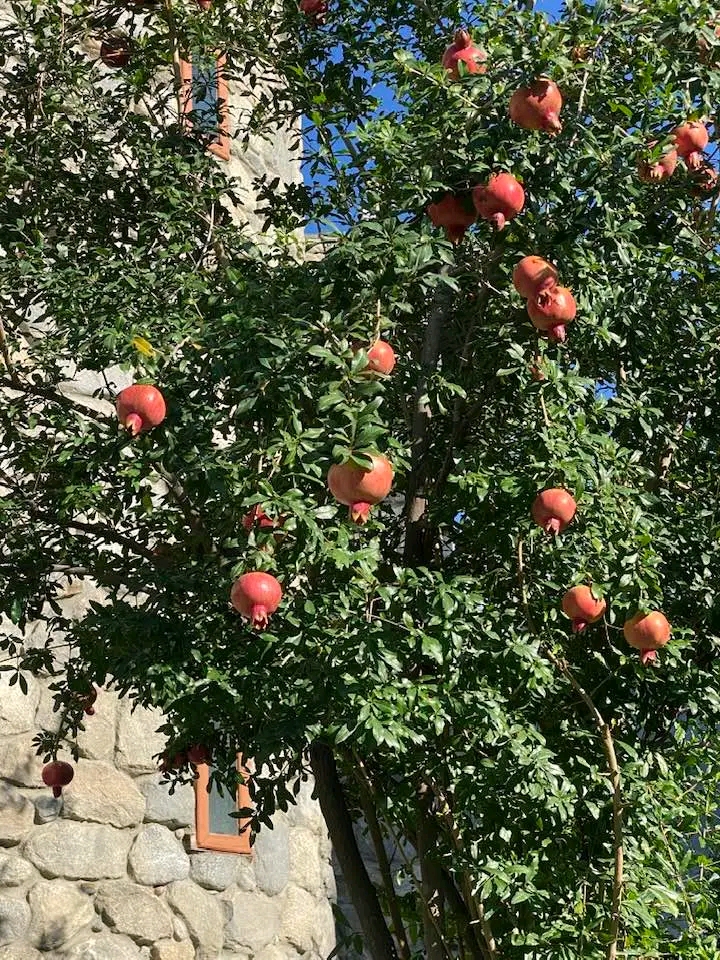
Pomegranate plant (Punica granatum)
🌿 Introduction
The pomegranate is a fruit-bearing shrub or small tree scientifically known as Punica granatum. It belongs to the family Lythraceae and is widely cultivated in regions with warm and relatively dry climates.
Recognized by its distinctive round fruit and jewel-like edible arils, the pomegranate has been valued for centuries as a food plant and has also played an important role in traditional cultures and agricultural systems.
🔬 Botanical Characteristics
Pomegranate is generally a deciduous shrub or small tree with multiple branches. Depending on growing conditions, cultivated plants can reach several metres in height.
- Kingdom: Plantae
- Family: Lythraceae
- Genus: Punica
- Species: Punica granatum
- Common name: Pomegranate
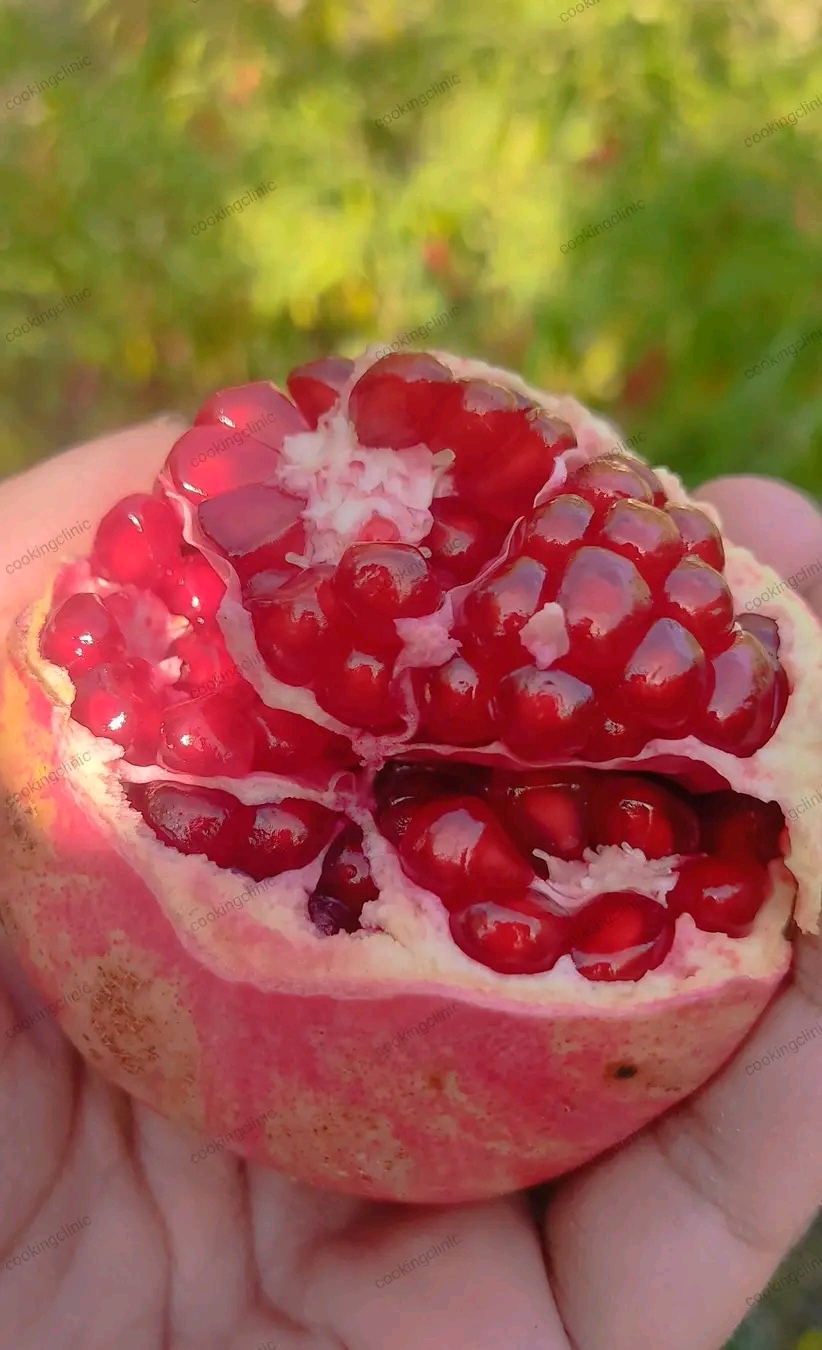
Pomegranate fruit with edible arils (Punica granatum)
🍎 The Pomegranate Fruit
The pomegranate fruit has a tough outer rind surrounding numerous juicy structures commonly called arils. Each aril contains a seed surrounded by edible, often red or pink, juicy tissue.
Pomegranate varieties differ considerably in fruit size, colour, sweetness, acidity, and seed characteristics.
🌍 Origin and Geographical Distribution
Pomegranate has a long history of cultivation across parts of Western and Central Asia and the Mediterranean region. It is now cultivated in many parts of the world where suitable climatic conditions exist.
Major cultivation areas include regions of Asia,India, Afghanistan, Pakistan, the Mediterranean, the Middle East, North Africa, and other warm agricultural regions.
🌱 Cultivation
Pomegranate generally performs well in warm climates and can tolerate relatively dry conditions once established. It grows best in well-drained soil with adequate sunlight.
Plants can be propagated through seeds or vegetative methods such as cuttings. Commercial cultivation often focuses on suitable varieties, irrigation management, pruning, pollination, pest management, and fruit quality.
🥗 Nutritional Value
Pomegranate arils provide water, carbohydrates, dietary fibre, vitamins, minerals, and naturally occurring phytochemicals.
Pomegranate is also notable for its polyphenolic compounds, including anthocyanins and other compounds that have been investigated in nutritional and biomedical research.
🥗Chemical constituents
- Bark contain alkaloids
- Root: alkaloids, pseudo-palletierine, palletierine, isopalletierine, methyl palletierine.
- Flower: sitosterol, tanins – punicalagin & punicalin.
- Fruits: Mannose, Galactose, rhamnose, arabinose, glucose, galactouronic acid.
🌿 Traditional Uses
Different parts of the pomegranate plant have been used traditionally in various cultures. The fruit has commonly been consumed fresh or processed into juices, sauces, syrups, and other foods.
Traditional uses of the peel, flowers, bark, and other plant parts have also been documented in different systems of traditional medicine. However, traditional use should not automatically be interpreted as proof of medical effectiveness.
🧪 Scientific Research
Modern research has investigated pomegranate and its naturally occurring compounds in areas including nutrition, antioxidant activity, inflammation, cardiovascular health, metabolic health, and other biological processes.
Research findings vary depending on the preparation, concentration, population studied, and experimental design. Therefore, individual research findings should not be interpreted as medical treatment recommendations.
🏛️ Historical and Cultural Significance
Pomegranate has a long and rich cultural history. Its distinctive fruit and numerous seeds have contributed to symbolic associations with fertility, abundance, prosperity, life, and renewal in different cultures.
The fruit has appeared in historical art, literature, mythology, agriculture, and traditional food cultures across several regions.
References from Holy Quran
Surah 6. Al-An'am, Ayah 99
Surah 6. Al-An'am, Ayah 141
Surah 55.Ar-Rahman, Ayah 68.
🎓 Why Study the Pomegranate?
Pomegranate provides an interesting example for students and researchers studying botany, plant physiology, agriculture, nutrition, ecology, ethnobotany, and cultural history.
Studying a single plant species from multiple perspectives can help connect scientific knowledge with agriculture, food systems, biodiversity, and human culture.
⚠️ Important Note
The information on this page is provided for educational and informational purposes only. Statements concerning nutrition, traditional uses, or potential health effects are not intended to diagnose, treat, cure, or prevent any disease.
Always consult qualified healthcare, agricultural, or botanical professionals when making important decisions related to health, cultivation, or plant use.