Free AI-Powered Botanical Identifier

Plant Identification Online

Instantly identify plants, flowers, trees, herbs, and succulents with AI. Upload a photo or take a picture to explore botanical profiles and care tips. No need to install extra app in your andriod, computer, laptop or any other operating systems.

🌿

Select a plant image to identify


Simple 3-Step Process

How It Works

Identifying plants has never been easier. Follow these simple steps to discover detailed information about plants using our AI-powered technology.

1

Upload a Plant Photo

Take a clear picture or upload an existing image of any plant, flower, tree, herb, shrub, or succulent.

2

AI Identifies the Plant

Our AI analyzes the image using advanced plant recognition technology to identify the species.

3

Explore Plant Information

Learn the scientific name, description, history, health benefits, native region, and plant care information.

Help & Answers

Frequently Asked Questions

Find quick answers to common questions about our free AI plant identifier and plant library.

Is Plant Identification Online free?

Yes. Plant Identification Online is completely free to use.

How accurate is AI plant identification?

Our AI provides highly accurate results, but users should always verify important plant identifications with trusted botanical resources.

Can I identify flowers?

Yes. You can identify flowers, herbs, trees, shrubs, grasses, succulents, and many other plant species.

Can I identify medicinal plants?

Yes. Our system identifies many medicinal plants and provides educational information about them.

Do I need to install an app?

No. Plant Identification Online works directly in your web browser on desktop and mobile devices.

🤖 About Our Plant Identification AI Tool

Plant Identification Online Tool uses Artificial Intelligence together with trusted botanical databases to help identify plants from uploaded images. Our goal is to make plant identification simple, fast, and accessible for everyone.

While our AI provides highly accurate results in most cases, no automated system can guarantee 100% accuracy. Image quality, lighting conditions, plant growth stage, and similarities between species may affect identification results.

We recommend verifying important identifications—especially for edible, medicinal, poisonous, or protected plants—using reliable botanical references or qualified experts before making decisions.

Our mission is to support students, researchers, farmers, gardeners, educators, and nature enthusiasts by providing educational plant information while encouraging environmental awareness and scientific learning. So, enjoy our free Plant Identification AI Tool .

🌱 Why Plant Identification Matters

Plants play a vital role in sustaining life on Earth. They provide oxygen, food, medicine, shelter, reduces global warming by intake of carbon dioxide and countless natural resources that support humans, animals, and ecosystems. So, to Identify plants correctly is important not only for scientific research but also for education, agriculture, environmental conservation, and public safety.

For students, plant identification helps build knowledge of botany, ecology, and biodiversity. It allows learners to understand plant classification, scientific names, life cycles, history and the important roles which different species play in nature.

Researchers and scientists rely on accurate plant identification when studying ecosystems, discovering new species, monitoring climate change, and preserving endangered plants. Reliable identification contributes to better scientific understanding and conservation efforts worldwide. By knowing plant name scientists and botanists can easily search for availablity of plants in other reagions and can help farmers in cultivation and positive growth of plants in other regions. We can also know the imporantce of a specific plant.

Farmers and gardeners benefit by correctly identifying crops, weeds, beneficial plants, and harmful species. Proper identification supports healthier farming practices, improves crop management, and helps prevent damage caused by invasive or toxic plants.

Many plants have traditional medicinal uses, while others can be poisonous if misidentified. Using AI-assisted plant identification helps users learn about plant characteristics, but important decisions should always be verified using trusted botanical references or qualified experts.

Plant Identification Online was created to make plant knowledge freely accessible to everyone. Our mission is to support students, researchers, farmers, educators, gardeners, and nature enthusiasts by providing accurate plant identification together with educational information about each species.

"By encouraging people to explore and understand the plant world, we hope to promote environmental awareness, biodiversity conservation, sustainable living, and scientific learning for future generations. Everyone should strive to become a steward of nature and protect this beautiful Earth from harmful gases and pollutants. We urge everyone to contribute according to their ability to combat global warming and save endangered plants. By growing trees, crops, and various plant species, we can collectively help slow the continuous melting of our glaciers."

Environmental Impact • Climate Action

How Growing Plants Directly Protects Glaciers and the Environment

The link between planting flora and protecting glaciers can be explained through several environmental mechanisms:

Slowing Glacial Melt - Glaciers and ice landscape protected by vegetation and climate action

Slowing Glacial Melt

Glaciers are melting rapidly due to the enhanced greenhouse effect warming the atmosphere. Plants and trees act as important carbon sinks by absorbing carbon dioxide (CO₂), a major greenhouse gas. Increasing vegetation can therefore contribute to reducing atmospheric CO₂ and the long-term warming pressure that drives glacial melt.

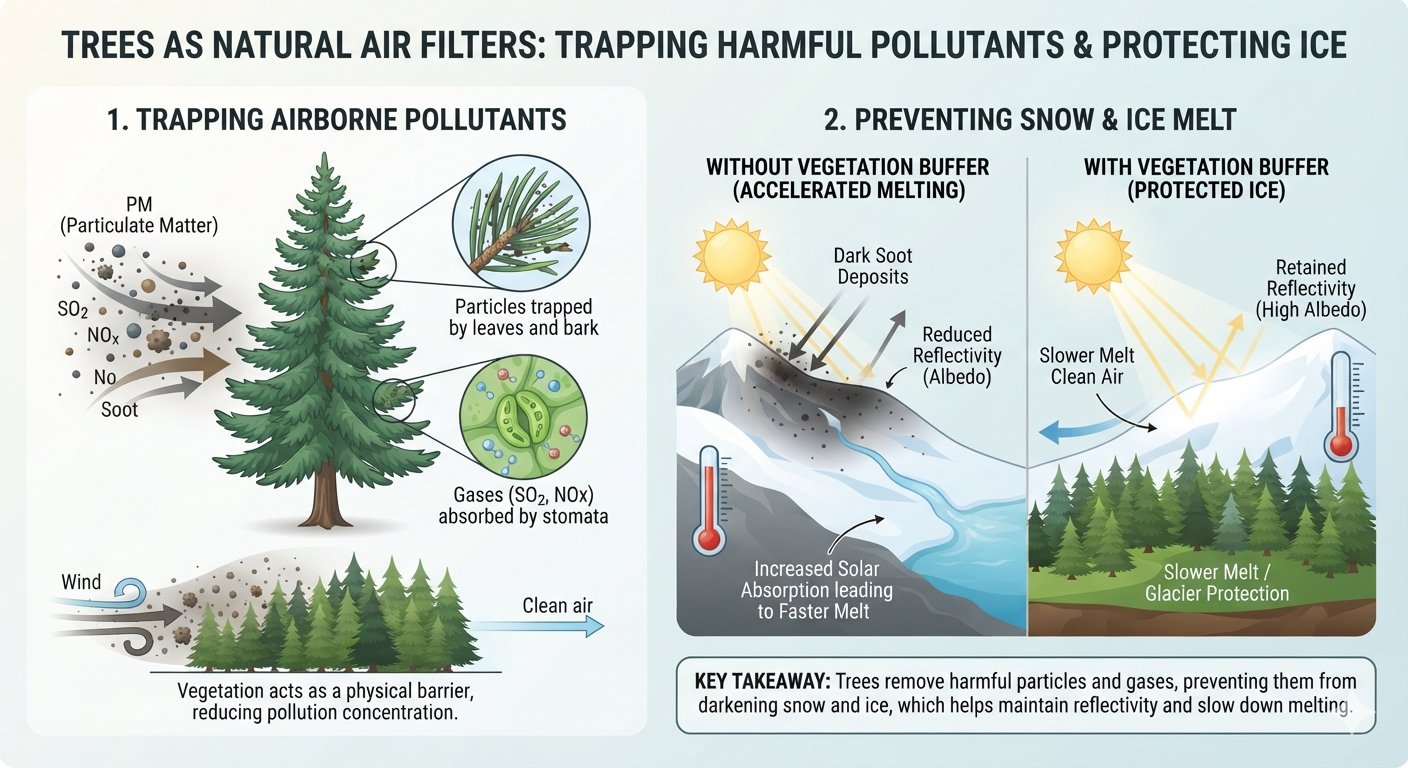
Trapping Harmful Pollutants - Green trees and vegetation filtering air pollution and soot particles

Trapping Harmful Pollutants

Trees and other vegetation can help remove or intercept some air pollutants, including particulate matter, sulfur dioxide, and nitrogen oxides. Reducing particulate pollution is particularly relevant because dark soot and other particles deposited on snow and ice can reduce reflectivity and increase solar energy absorption, contributing to faster melting.

Preserving Biodiversity - Thriving natural ecosystem, plants, and wildlife biodiversity

Preserving Biodiversity

Planting appropriate native species can support local insects, birds, and other wildlife. Maintaining healthy plant communities helps support biodiversity and ecosystem stability.

Simple Ways to Contribute According to Your Ability

If you want to put these words into action, we recommend starting with manageable, daily changes because small steps make big changes:

Plant Native Species

Grow flowers, shrubs, or trees that are native to your specific area to naturally boost local biodiversity without over-consuming water resources. Native plants can support local biodiversity and may be better adapted to local conditions and water availability.

Support Green Initiatives

Participate in local community tree-planting drives, habitat restoration activities, or urban gardening projects.

Reduce Your Carbon Footprint

Complement your planting efforts by throwing away less food, using energy efficiently, recycling where practical, and making other sustainable everyday choices.