🌿 Guava
Psidium guajava
Guava is a tropical fruit tree valued for its fragrant flowers, nutritious fruit, edible seeds, and adaptable growth. It is widely cultivated in tropical and subtropical regions and has become an important fruit crop in many parts of the world.
🌿 Botanical Information
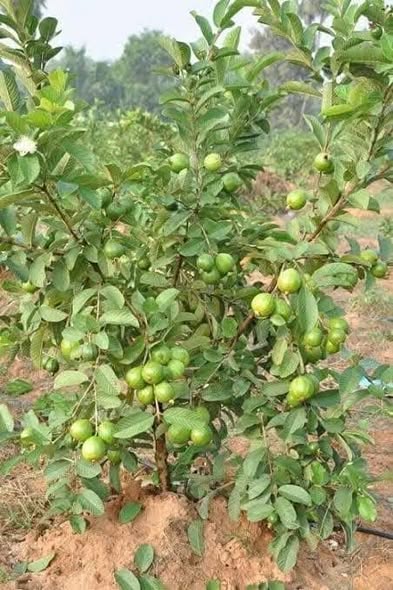
Guava, scientifically known as Psidium guajava, is a flowering plant belonging to the myrtle family, Myrtaceae.
It is usually a small to medium-sized evergreen or semi-evergreen tree or shrub. Guava is especially recognized for its aromatic leaves, white flowers, and round or oval fruits.
Scientific Classification
- Kingdom: Plantae
- Family: Myrtaceae
- Genus: Psidium
- Species: Psidium guajava
- Common name: Guava
- Plant type: Fruit tree
🌳 Description of the Guava Tree
Guava is generally a small to medium-sized tree with a branching crown. Its bark is often smooth and may peel or flake as the tree develops.
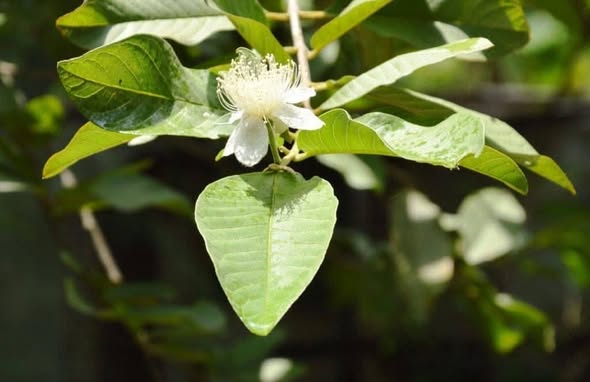
The leaves are opposite, oval to elliptical, and have prominent veins. When crushed, the leaves can release a characteristic aromatic scent.
Guava produces attractive white flowers with numerous stamens. These flowers are followed by fleshy fruits that vary in shape, size, skin colour, and flesh colour.
🌍 Native Region and Distribution
Guava is generally considered native to tropical regions of the Americas, particularly areas extending from Mexico through Central America and parts of South America.
It has been introduced and cultivated extensively throughout tropical and subtropical regions of Asia, Africa, the Pacific, and other parts of the world.
Because guava can grow in a wide range of conditions, it has become naturalized in some regions outside its original range.
📜 History and Cultural Importance
Guava has a long history of cultivation and use in tropical regions of the Americas.
Following European exploration and the movement of crops between continents, guava spread to many tropical regions around the world.
Today, guava is valued both as a cultivated fruit crop and as a familiar tree in home gardens, farms, and tropical landscapes.
🍈 Guava Fruit
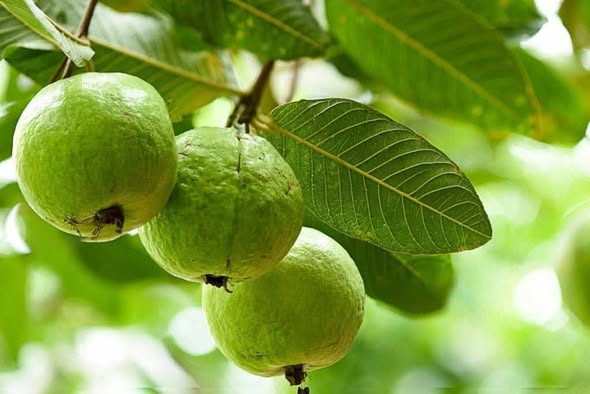
Guava fruits are typically round, oval, or pear-shaped. Depending on the variety, the skin may be green, yellowish, or yellow when mature.
The flesh can be white, cream, pink, or reddish. Small edible seeds are usually embedded throughout the fruit.
Guava has a distinctive sweet and fragrant flavour and can be eaten fresh or used in juices, jams, jellies, desserts, sauces, and other foods.
🥗 Nutritional Value
Guava is a nutrient-rich fruit and is particularly well known for its vitamin C content.
It also provides dietary fiber and contains various vitamins, minerals, and naturally occurring plant compounds.
The nutritional composition can vary according to variety, maturity, growing conditions, and serving size.
❤️ Health Benefits
As a fruit, guava can contribute useful nutrients to a balanced diet. Its vitamin C and dietary fiber are among its notable nutritional characteristics.
Guava also contains antioxidant compounds such as carotenoids and polyphenols, with concentrations varying among varieties and plant parts.
Eating guava as part of a varied diet can support overall nutritional health, but it should not be considered a treatment for a specific disease.
🍃 Guava Leaves
Guava leaves are simple, opposite, and generally oval or elliptical in shape. They have prominent veins that are often easy to observe on the leaf surface.
The leaves contain naturally occurring compounds and have been used traditionally in different cultures for herbal preparations.
🌸 Guava Flowers
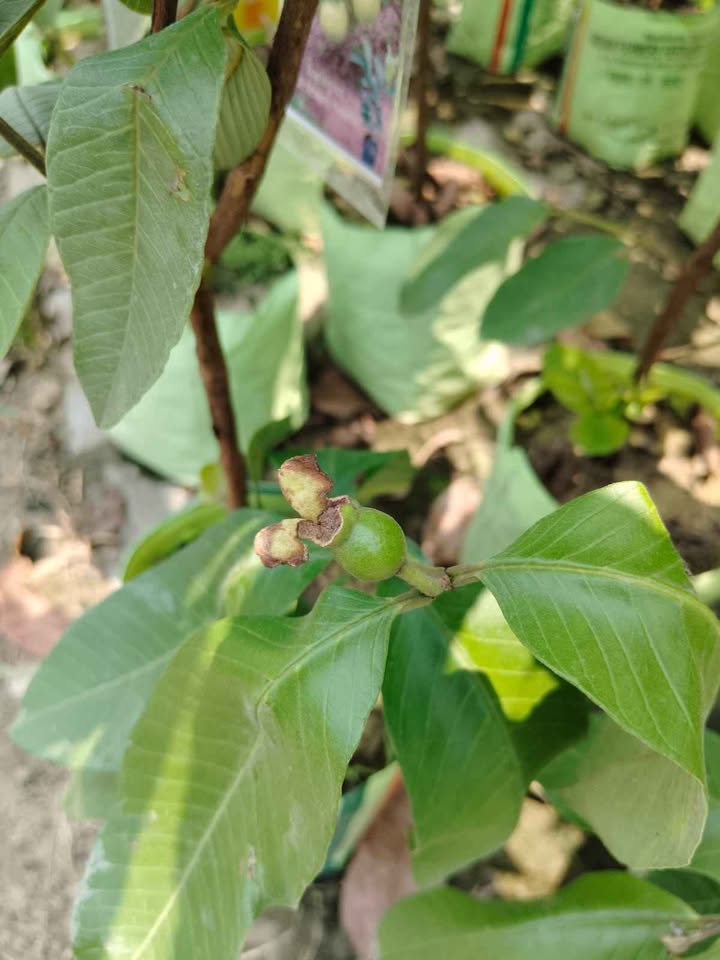
Guava flowers are usually white and develop singly or in small groups in the leaf axils.
They contain numerous prominent stamens, giving the flowers a distinctive appearance.
Bees and other insects may visit guava flowers and contribute to pollination.
🌿 Traditional Uses
Guava fruit has traditionally been used as a food throughout tropical regions. Leaves, bark, roots, and other parts have also appeared in traditional herbal practices.
Traditional Knowledge
Guava leaves have been used traditionally in various herbal preparations. Different communities have used guava plant material in different ways depending on local knowledge and cultural practices.
Traditional uses do not necessarily demonstrate clinical effectiveness, and preparations can vary considerably in strength and composition.
🧪 Chemical Constituents
Guava contains a variety of naturally occurring plant compounds. Different parts of the plant contain different concentrations and types of compounds.
Guava fruit contains vitamin C, carotenoids, polyphenols, and other nutritional and phytochemical compounds.
Guava leaves contain compounds including flavonoids, tannins, phenolic compounds, and other secondary metabolites.
🔬 Scientific Research
Guava has been investigated in nutritional, botanical, agricultural, phytochemical, and pharmacological research.
Studies have examined compounds from guava fruit, leaves, seeds, and other plant parts for antioxidant, antimicrobial, and other biological activities.
Laboratory and experimental findings should not automatically be interpreted as proven medical effects in humans. More research may be required to establish the effectiveness of specific preparations and uses.
🌱 Cultivation
Guava grows well in warm tropical and subtropical climates. It can tolerate a range of soil conditions but generally performs best in fertile, well-drained soil.
Guava trees benefit from adequate sunlight and regular moisture, particularly during fruit development.
Guava can be propagated from seeds as well as through vegetative methods such as cuttings and grafting, depending on the cultivar and production system.
🌾 Agricultural Importance
Guava is an important tropical fruit crop in many countries. Farmers grow it for fresh fruit markets as well as for processing.
Guava fruits can be processed into juices, nectar, jams, jellies, preserves, desserts, and other food products.
The tree can produce fruit under a range of tropical conditions, making it useful for both commercial orchards and small household gardens.
🌍 Ecological Importance
Guava flowers provide resources for insects and other pollinating organisms, while its fruits can be consumed by birds and mammals.
As with many fruit-bearing plants, guava can contribute to local food webs and provide vegetation cover.
However, guava can become invasive in some regions outside its native range, so cultivation should consider local environmental conditions.
🔎 How to Identify Guava
Guava can often be recognized by its characteristic combination of smooth or peeling bark, opposite aromatic leaves, white flowers, and round or oval fruits.
- Small to medium-sized tree or shrub
- Opposite oval or elliptical leaves
- Prominent leaf veins
- White flowers with numerous stamens
- Round, oval, or pear-shaped fruits
- Edible flesh with numerous small seeds
- Distinctive fragrant fruit
For accurate identification, examine the leaves, flowers, fruit, bark, growth form, and geographic location together.
🐦 Guava and Wildlife
Guava fruits can provide food for birds, mammals, and other fruit-eating animals.
The flowers also provide nectar and pollen resources for insects and other visiting organisms.
🌱 Conservation
Guava is widely cultivated and is not simply a wild plant in many regions. Conservation of native plant diversity nevertheless remains important where guava has become naturalized or invasive.
Maintaining diverse agricultural systems and protecting natural habitats helps conserve native plant species and ecological communities.
Responsible cultivation and monitoring are particularly important in areas where guava can spread beyond cultivated land.
🕊️ Cultural Significance
Guava is an important food plant in many tropical cultures. Its fruit is commonly eaten fresh and incorporated into traditional and modern foods.
Guava trees are also commonly grown around homes, farms, gardens, and community landscapes in tropical regions.
⚠️ Important Information
Guava fruit is a food and can be part of a balanced diet. However, traditional preparations made from leaves, bark, roots, or other plant parts should not automatically be considered medically proven treatments.
Anyone considering concentrated herbal preparations for a health condition should consult a qualified healthcare professional.
🔬 Why Study Guava?
Guava is important from botanical, nutritional, agricultural, ecological, cultural, and economic perspectives.
Studying guava helps us understand tropical fruit production, plant nutrition, traditional plant knowledge, pollination, biodiversity, and sustainable agriculture.