🫒 Olive Tree
Olea europaea
The olive tree is one of the most historically important plants of the Mediterranean region and is also mentioned several times in the Holy Quran.
🌿 Botanical Information
The olive tree, scientifically known as Olea europaea, is an evergreen tree belonging to the family Oleaceae.
It is widely cultivated for its fruit and the valuable oil obtained from olives. The species is strongly associated with the Mediterranean region and is now cultivated in many parts of the world.
Scientific Classification
- Kingdom: Plantae
- Family: Oleaceae
- Genus: Olea
- Species: Olea europaea
- Common name: Olive
🌱 Description of the Olive Tree
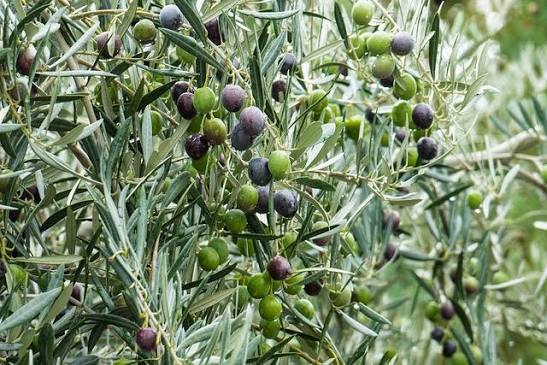
The olive is a long-lived evergreen tree with a characteristic grey-green appearance. Its leaves are narrow and leathery, with a darker green upper surface and a silvery underside.
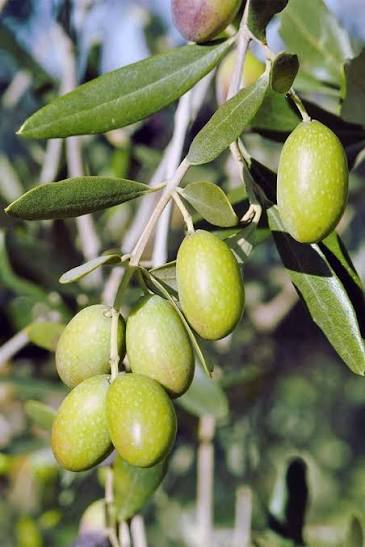
Olive trees produce small flowers that develop into olive fruits. The fruits are initially green and generally become darker as they mature, although fruit colour varies among cultivars.
Olive trees are adapted to warm climates and can tolerate relatively dry conditions once established.
🌍 Native Region and Distribution
Olea europaea is associated particularly with the Mediterranean region and has a natural range extending across parts of Europe, Africa and Asia.
Because of its agricultural importance, the olive tree is now cultivated in many countries with suitable climates.
📜 History and Cultural Importance
Olive cultivation has a very long history. Olive trees and olive products have been important in Mediterranean agriculture, food traditions, trade and culture for thousands of years.
Olive oil has traditionally been used for cooking, food preservation, lighting, cosmetics and various cultural purposes.
The olive tree has also held symbolic and religious importance in several ancient cultures and religious traditions.
📖 Olive in the Holy Quran
The olive is mentioned in several places in the Holy Quran. Its references occur in passages discussing plants, provision, light and the signs of Allah's creation.
Surah Al-An'am — 6:99
The verse mentions the olive among plants produced from water and describes the development of vegetation and fruit.
Surah Al-An'am — 6:141
The olive is mentioned among the crops and fruits associated with Allah's provision.
Surah An-Nahl — 16:11
The verse mentions olives together with other plants and fruits that are produced through rainwater.
Surah An-Nur — 24:35
The famous Verse of Light contains the expression referring to an olive tree whose oil almost gives light even without being touched by fire.
Surah Al-Mu'minun — 23:20
The verse describes a tree emerging from Mount Sinai producing oil and a food condiment for those who eat.
Surah At-Tin — 95:1
The Quran opens this short chapter with an oath by the fig and the olive.
🫒 Olive Oil
Olive oil is obtained from the fruit of the olive tree. It is an important part of traditional Mediterranean cuisine and is widely used around the world.
Olive oil contains predominantly monounsaturated fats together with smaller amounts of other fatty acids and naturally occurring plant compounds.
🍃 Traditional Uses and Applications
- Olive fruits are used as food after appropriate processing.
- Olive oil is widely used in cooking and food preparation.
- Olive oil has traditionally been used for skin and hair care.
- Olive oil has historically been used as a source of lamp fuel.
- Olive wood is also used for various products and crafts.
❤️ Nutritional and Health Research
Olive oil is an important source of dietary fat and is a major component of traditional Mediterranean dietary patterns.
Extra-virgin olive oil contains naturally occurring compounds such as phenolic substances that have been studied for their antioxidant and other biological properties.
Scientific research continues to investigate the relationship between olive oil consumption and different aspects of human health.
⚠️ Important Information
Information on this page is provided for educational purposes only. Traditional uses and scientific research should not be interpreted as medical advice.
Do not use olive products as a substitute for prescribed medical treatment. People with specific medical conditions or dietary concerns should consult a qualified healthcare professional.
🌍 Environmental Importance
Olive trees are perennial plants that can live for many years. Their cultivation forms an important part of many agricultural landscapes, particularly around the Mediterranean basin.
Olive-growing landscapes can provide habitat for organisms and contribute to agricultural biodiversity when managed sustainably.
🌍 Chemical constituent
Rutin, luteolin 7-O-glucoside, luteolin 7-O-rutinoside, luteolin 40-O glucoside, apigenin, 7-O-glucoside and apigenin 7-O-rutinoside, tyrosol, caffeic acid,
verbascoside, oleuropein, luteolin, 7-O-glucoside, rutin, apigenin 7-O-rutinoside, luteolin, apigenin and diosmetin
🔬 Why Study the Olive Tree?
The olive tree is important from botanical, agricultural, nutritional, cultural and historical perspectives.
Studying the olive provides an opportunity to understand plant adaptation, traditional agriculture, food systems, biodiversity and the relationship between plants and human civilizations.