🌴 Date Palm
Phoenix dactylifera L.
The Date Palm is one of the most important fruit-bearing trees of the Middle East and surrounding regions and is mentioned repeatedly in the Holy Quran.
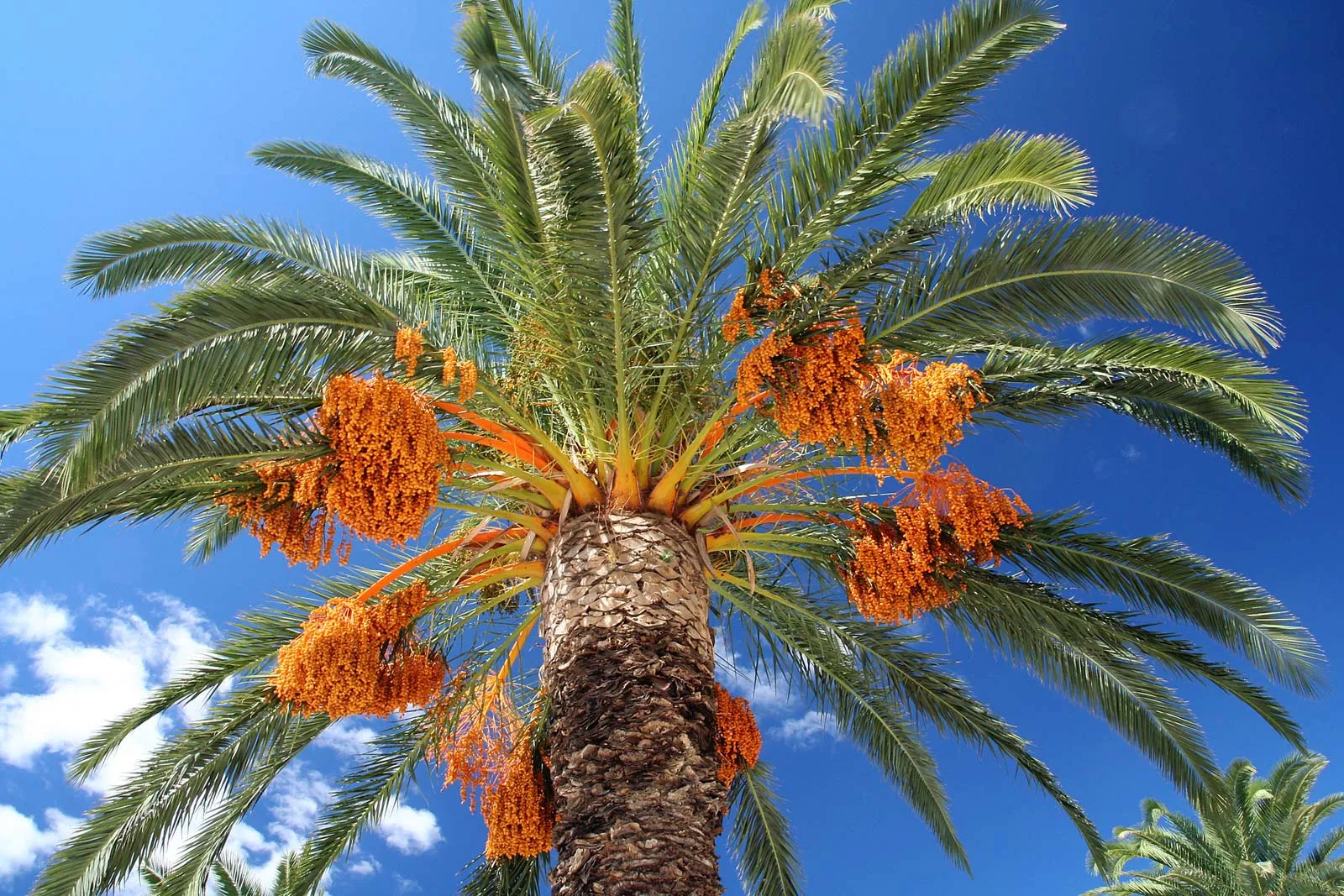
🌿 Botanical Information
The Date Palm, scientifically known as Phoenix dactylifera L., is a flowering plant belonging to the palm family Arecaceae.
It is cultivated primarily for its sweet edible fruits, known as dates. The species is particularly associated with hot and dry regions and has played an important role in agriculture and human settlements for thousands of years.
Scientific Classification
| Classification | Name |
|---|---|
| Kingdom | Plantae |
| Order | Arecales |
| Family | Arecaceae |
| Genus | Phoenix |
| Species | Phoenix dactylifera |
| Common Name | Date Palm |
🌱 Description of the Date Palm
The Date Palm is a tall palm with an unbranched trunk covered by the hardened remains of older leaf bases. Mature trees produce a crown of long, pinnate leaves at the top of the trunk.
Date palms are dioecious, meaning that male and female flowers normally occur on separate trees. Female trees produce the fruit after pollination.
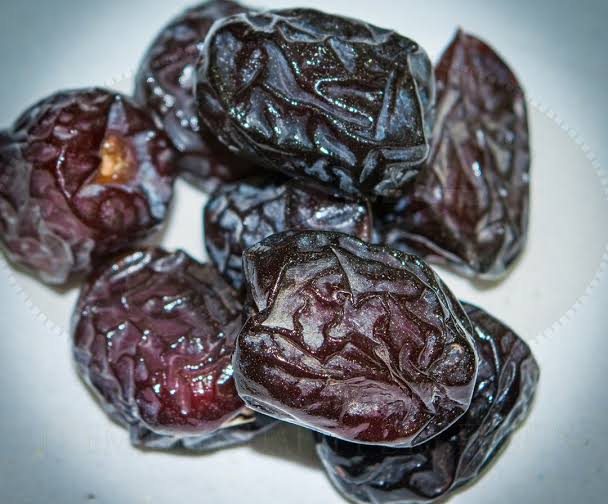
The fruits are commonly green during earlier stages of development and change in colour and texture as they mature. Different cultivated varieties produce dates with different sizes, colours, textures and flavours.
🌍 Native Region and Distribution
Kew's Plants of the World Online gives the native range of Phoenix dactylifera as extending from the Arabian Peninsula to southern Pakistan.
Its native distribution includes areas such as the Gulf States, Iran, Iraq, Oman, Pakistan and Saudi Arabia. The species has subsequently been introduced and cultivated in many other parts of the world.
Today, date palms are especially important in arid and semi-arid agricultural regions where their fruits form an important food crop.
📜 History and Cultural Importance
The Date Palm has a very long history of cultivation. Kew notes that it is thought to have been cultivated for more than 6,000 years in the Middle East.
Date palms became particularly valuable in regions where their fruit could provide an energy-rich food while the tree itself could contribute useful materials.
The fruit has remained an important part of food traditions throughout the Middle East, North Africa and other date-producing regions.
The Date Palm also has cultural and religious significance in several traditions, including Islamic culture.
📖 Date Palm in the Holy Quran
Palm trees and their fruits are mentioned repeatedly in the Holy Quran. The references occur in different contexts, including gardens, provision, agricultural abundance, natural signs and descriptions of palm trees.
Surah Al-Baqarah — 2:266
The verse presents an example involving a garden containing date palms and grapevines, together with other fruits and flowing water.
Surah Al-An'am — 6:99
The verse describes plants and gardens produced by water and mentions date palms among the fruits growing from them.
Surah Al-An'am — 6:141
Date palms are mentioned in the context of cultivated gardens, crops and agricultural provision.
Surah An-Nahl — 16:11
The verse mentions date palms together with crops, olives, grapes and other fruits produced through rainwater.
Surah Maryam — 19:23
Maryam is described as being driven by the pains of childbirth to the trunk of a date palm.
Surah Maryam — 19:25
In the following passage, Maryam is instructed to shake the trunk of the date palm so that fresh, ripe dates fall upon her.
Surah Taha — 20:71
Palm trunks are mentioned in the account concerning Pharaoh and the magicians.
Surah Al-Mu'minun — 23:19
Gardens of date palms and grapevines are mentioned together with abundant fruits from which people eat.
Surah Ash-Shu'ara — 26:148
Palm trees are mentioned in a description of fields and agricultural abundance.
Surah Ya-Sin — 36:34
Gardens containing date palms and grapevines are mentioned together with springs of water.
Surah Qaf — 50:10
The Quran describes lofty palm trees with fruit arranged in layers.
Surah Ar-Rahman — 55:11
The verse mentions fruit and palm trees having sheathed clusters.
Surah Ar-Rahman — 55:68
Date palms and pomegranates are mentioned among the fruits associated with the gardens described in the chapter.
🍂 The Date Fruit
Dates are the edible fruits of the Date Palm. They can be eaten at different stages of ripeness and are available in numerous cultivated varieties.
Dates are naturally rich in carbohydrates, particularly sugars, and also contain dietary fibre and a variety of minerals and plant compounds.
Fresh and dried dates differ in their water content and therefore also differ in the concentration of nutrients and sugars by weight.
❤️ Nutritional Value
Dates are an energy-rich fruit and are commonly consumed as part of meals and snacks.
They provide carbohydrates and dietary fibre along with several vitamins and minerals in varying amounts.
Because dried dates contain concentrated natural sugars, portion size can be relevant when considering total dietary carbohydrate and energy intake.
⚠️ Important Nutritional Note
Dates are nutritious but are also relatively concentrated in natural sugars. People managing conditions requiring carbohydrate or sugar monitoring should consider their overall dietary intake and follow advice from a qualified healthcare professional.
🌿 Traditional Uses and Applications
- Dates are widely consumed as fresh or dried fruit.
- Dates can be incorporated into desserts, breads, drinks and other foods.
- Date syrup and other processed date products are produced in some regions.
- Date palm leaves have traditionally been used for weaving, roofing and other household purposes.
- Other parts of the palm have historically been used for fuel, construction and handicrafts.
- Date palms are also cultivated as important agricultural and landscape plants.
🌾 Importance in Agriculture
Date Palm is an economically important fruit crop in many hot and dry regions.
Its ability to grow in arid environments has made it particularly valuable in oasis agriculture and other irrigated farming systems.
Many cultivated varieties have been selected for differences in fruit size, texture, colour, sweetness, ripening time and storage characteristics.
Chemical constituents
-Vitamin –A,B,D Arabinose, galactose, xylose, rhamnose, uronic acid.
🌍 Environmental Importance
Date palms form distinctive agricultural landscapes in many desert and semi-desert regions.
In oasis farming systems, palms can form part of multi-layer agricultural systems in which crops of different heights are cultivated together.
Sustainable management of water, soil and agricultural resources is important for maintaining productive date-growing regions.
🔬 Scientific Research
Modern research on the Date Palm covers plant genetics, domestication, breeding, fruit development, agricultural production and responses to environmental conditions.
Genetic and archaeological research has also been used to investigate the long history of Date Palm cultivation and domestication.
Researchers continue to study date varieties and their genetic characteristics in order to improve cultivation, fruit quality and agricultural resilience.
🕌 Cultural and Religious Significance
The Date Palm has a particularly strong cultural association with the Middle East and Islamic civilization.
Its repeated appearance in the Holy Quran has made the palm tree and its fruit especially recognizable within Islamic cultural traditions widely use during the month of Ramadan.
The tree also appears in historical art, architecture, agriculture and traditional food cultures across regions where dates have been cultivated.
⚠️ Important Information
The information on this page is provided for educational purposes only.
Traditional uses, nutritional information and scientific research should not be interpreted as medical advice or as evidence that a plant or fruit can diagnose, treat or cure a disease.
Important health decisions should always be discussed with a qualified healthcare professional.
📚 Why Study the Date Palm?
The Date Palm provides an excellent example of the relationship between plants, agriculture, food, history, culture and human civilization.
Studying Phoenix dactylifera helps students understand plant classification, fruit production, adaptation to arid environments, crop domestication and the cultural importance of plants.
It also provides an opportunity to explore how a single plant species can have botanical, nutritional, agricultural and cultural importance at the same time.