🌿 Ginger
Zingiber officinale
Ginger is an aromatic flowering plant whose underground rhizome is widely used as a spice and traditional food ingredient. Ginger is also specifically mentioned in the Holy Quran in the description of a drink prepared for the people of Paradise.
🌿 Botanical Information
Ginger, scientifically known as Zingiber officinale, is a flowering plant belonging to the family Zingiberaceae.
The plant is cultivated primarily for its aromatic underground rhizome, commonly called ginger root. The rhizome is widely used as a culinary spice and in traditional food practices.
Scientific Classification
- Kingdom: Plantae
- Family: Zingiberaceae
- Genus: Zingiber
- Species: Zingiber officinale
- Common name: Ginger
🌱 Description of the Ginger Plant
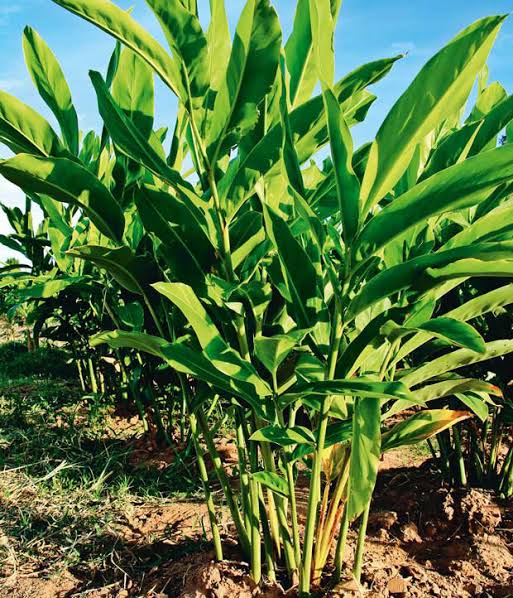
Ginger is a perennial herbaceous plant that develops narrow, upright stems arising from an underground rhizome.
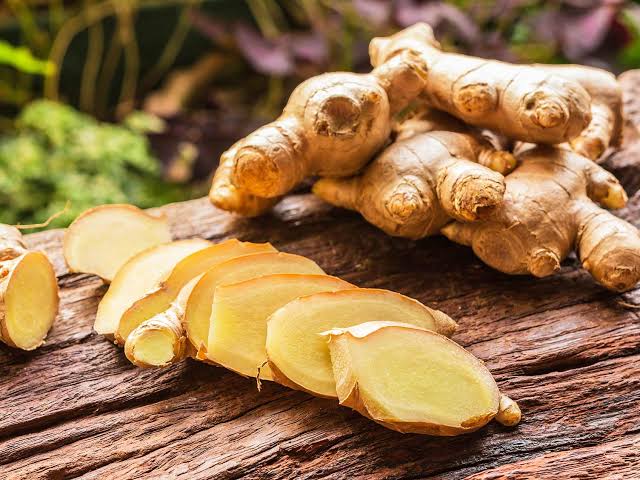
The leaves are elongated and arranged along the stems. The underground rhizome is irregularly branched and contains many of the aromatic compounds responsible for the characteristic smell and flavour of ginger.
Ginger plants can produce flowers on separate flowering shoots. The plant generally grows best in warm and humid conditions.
🌍 Native Region and Distribution
Ginger is believed to have originated in tropical parts of Asia, although its exact wild origin is difficult to establish because the plant has been cultivated and propagated by humans for a very long period. Bangladesh, Yaman, Oman, Seralone, India and Pakistan
Today, ginger is cultivated widely throughout tropical and subtropical regions of the world.
Major ginger-producing regions include parts of Asia, Africa, and other warm agricultural areas.
Chemical constituent
Carotenoids, flavonoids, cinnamic acids, benzoic acids, folic acid, ascorbic acid, tocopherols, tocotrienols, Beta-carotene, ascorbic acid, alpha tocopherols, terpenoids, alkaloids, polyphenols, flavones glycosides, rutin,
📜 History and Cultural Importance
Ginger has a long history of human use. It has been cultivated and traded in Asia for centuries and later became an important spice in many other regions.
Historically, ginger has been used as a culinary ingredient, flavouring, and component of traditional preparations.
Because of its distinctive aroma and warming flavour, ginger became an important ingredient in numerous food traditions around the world.
📖 Ginger in the Holy Quran
Ginger is mentioned explicitly in the Holy Quran in Surah Al-Insan, where it is described in connection with a drink offered to the righteous in Paradise.
Surah Al-Insan — 76:17
The verse describes a drink whose mixture is associated with ginger.
The Quran says that the righteous will be given a cup whose mixture is Zanjabil(ginger),
The reference to ginger in this verse has attracted attention because ginger was historically known as an aromatic and valued substance in human cultures.
The Quranic reference should be understood within its religious and textual context. Scientific descriptions of ginger should not be presented as interpretations of the Quranic verse.
🫚 Ginger Rhizome
The part of the ginger plant most commonly used as food is its underground rhizome.
Fresh ginger has a strong, aromatic flavour, while dried ginger generally has a more concentrated and warming taste.
Ginger can be used fresh, dried, powdered, preserved, or prepared as an ingredient in beverages and foods.
🍃 Traditional Uses and Applications
- Ginger is widely used as a culinary spice.
- Fresh ginger is used in cooking and beverages.
- Dried ginger can be ground into a powder and used as a flavouring.
- Ginger is traditionally used in various food and herbal preparations.
- Ginger is commonly used in teas and other beverages.
- Ginger is also used in confectionery, sauces, and spice mixtures.
❤️ Nutritional and Health Research
Ginger contains naturally occurring compounds known as gingerols, shogaols, and related constituents. These compounds contribute to the characteristic flavour and aroma of ginger.
Ginger has been studied scientifically for a variety of biological effects, including its potential antioxidant and anti-inflammatory activities.
Research has also investigated ginger and its constituents in relation to digestive processes and nausea.
Scientific evidence varies depending on the specific preparation, dose, and health outcome being studied. Further research continues to investigate the biological properties of ginger.
🧪 Chemical Constituents
Ginger contains a complex mixture of naturally occurring compounds. Important groups of constituents include pungent phenolic compounds and volatile aromatic compounds.
- Gingerols
- Shogaols
- Paradols
- Zingerone
- Volatile essential-oil constituents
The relative amounts of these compounds can vary depending on the variety of ginger, maturity, cultivation conditions, and processing method.
🍵 Ginger in Food and Beverages
Ginger is used in many cuisines around the world. It can be added to soups, curries, sauces, marinades, baked foods, desserts, and beverages.
Ginger tea and other ginger-based beverages are also popular in many cultures.
Both fresh and dried ginger are commonly used, although their flavour and chemical composition can differ.
⚠️ Important Information
Information on this page is provided for educational purposes only. Traditional uses and scientific research should not be interpreted as medical advice.
Ginger or ginger preparations should not be used as a substitute for prescribed medical treatment. People with specific medical conditions, allergies, or concerns about interactions with medicines should consult a qualified healthcare professional.
🌍 Environmental and Agricultural Importance
Ginger is an important tropical and subtropical crop cultivated for its edible rhizomes.
Its cultivation supports agricultural economies in several regions and contributes to the production of spices and food products.
Sustainable cultivation practices can help maintain soil quality, agricultural biodiversity, and efficient use of natural resources.
🔬 Why Study Ginger?
Ginger is important from botanical, agricultural, nutritional, cultural, historical, and religious perspectives.
Studying ginger provides an opportunity to understand plant cultivation, traditional food systems, naturally occurring plant compounds, and the historical movement of important crops between different regions.
Its explicit mention in the Holy Quran also makes ginger an important plant for exploring the relationship between religious texts, cultural history, and botanical knowledge.