🌱 Mustard Seed
Brassica nigra
Mustard seed is a small but historically important seed used as a food ingredient, spice, and in traditional applications. The mustard seed is also mentioned in the Holy Quran as an example of something extremely small whose weight and location are fully known to Allah.
🌿 Botanical Information
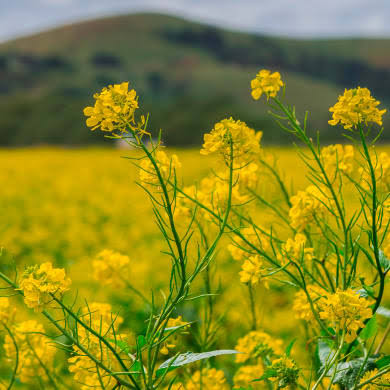
Mustard is a flowering plant belonging to the Brassicaceae family. Mustard plants are cultivated for their seeds, leaves, and in some species their edible oil.
Several species are commonly known as mustard. Brassica nigra, commonly known as black mustard, is one of the historically important mustard species.
Scientific Classification
- Kingdom: Plantae
- Family: Brassicaceae
- Genus: Brassica
- Species: Brassica nigra
- Common name: Black Mustard
- Plant type: Flowering herbaceous plant
🌱 Description of the Mustard Plant
Mustard plants are generally herbaceous plants with upright stems, green leaves, yellow flowers, and small seeds contained within elongated seed pods.
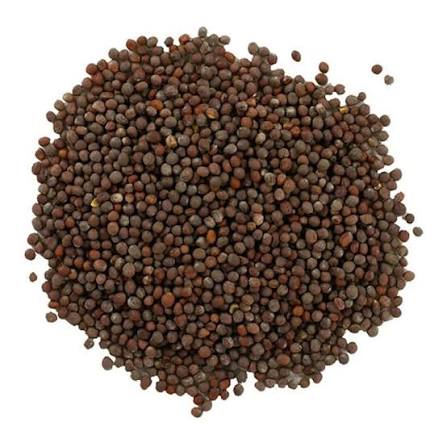
The seeds are usually very small and may vary in colour depending on the mustard species. Black mustard seeds, for example, are dark brown to black.
Mustard plants are cultivated in different regions for culinary, agricultural, and traditional purposes.
🌾 Mustard Seeds
Mustard seeds are small seeds produced inside the pods of mustard plants. Despite their very small size, they have a strong characteristic flavour and aroma.
Mustard seeds are commonly used as a spice and may be ground, crushed, or processed to produce mustard preparations and other food products.
Mustard seeds have also been used historically in traditional systems of herbal practice.
🌍 Distribution and Cultivation
Mustard species are cultivated in many regions of the world. They can grow in a range of temperate and agricultural environments.
Mustard has historically been associated with agriculture in parts of Europe, Asia, and the Mediterranean region and is now cultivated widely for seeds, oil, and food products.
📜 History and Cultural Importance
Mustard has a long history as a culinary and agricultural plant. Its seeds have been used as a spice and condiment for many centuries.
The strong flavour of mustard seeds comes from compounds produced when the seeds are damaged or crushed. This characteristic has contributed to their importance in traditional food preparation.
Mustard has also been used historically in traditional herbal practices in different cultures.
📖 Mustard Seed in the Holy Quran
The Holy Quran uses the mustard seed as an example of something extremely small whose weight and location are completely known to Allah. Two important references occur in Surah Al-Anbiyaa and Surah Luqman.
Surah Al-Anbiyaa — 21:47
“And We shall set up balances of justice on the Day of Resurrection, then none will be dealt with unjustly in anything. And if there be the weight of a mustard seed, We will bring it. And sufficient are We to take account.”
Surah Luqman — 31:16
“O my son! If it be (anything) equal to the weight of a grain of mustard seed, and though it be in a rock, or in the heavens or in the earth, Allah will bring it forth. Verily, Allah is Subtle (in bringing out that grain), Well-Aware (of its place).”
These references use the extremely small mustard seed as an illustration of precise divine knowledge, accountability, and the perfect balance of justice.
🧪 Chemical Constituents
According to the information provided for this page, the mustard seed contains several constituents of botanical and traditional interest.
Seed Contains
- Glucoside
- Sinigrin
- Sinapine
- Volatile isothiocyanate
- Essential oil
Some of these compounds contribute to the characteristic flavour, aroma, and biological properties associated with mustard seeds.
🌿 Traditional Medicinal Uses
Mustard seed has been used in traditional herbal practices for a variety of purposes. The traditional uses provided for this page include:
- Anthelmintic use
- Appetite-related use
- Traditional use for cough
- Traditional use associated with enlargement of the spleen
- Traditional use for itching
- Traditional use for skin diseases
- Traditional use associated with tumors
- Traditional use for rheumatism
🍽️ Culinary and Traditional Uses
- Mustard seeds are widely used as a spice.
- Seeds may be ground and used to prepare mustard condiments.
- Mustard seeds may be used in pickling and food preparation.
- Some mustard species are cultivated for edible vegetable oils.
- Young leaves of some mustard plants are also used as vegetables.
🔬 Scientific Interest
Mustard seeds are scientifically interesting because they contain glucosinolates and related compounds that can contribute to the characteristic chemistry and pungency of mustard.
When mustard tissues are damaged, enzymatic reactions can produce volatile compounds responsible for the familiar sharp aroma and taste of mustard.
Modern research continues to investigate mustard species, their phytochemicals, nutritional properties, agricultural value, and potential biological activities.
🌍 Agricultural and Environmental Importance
Mustard plants are important agricultural crops in many regions. They can provide seeds, edible oil, food ingredients, and plant material.
Mustard and related Brassicaceae crops are also important in agricultural systems because of their relatively rapid growth and usefulness in crop rotations and related farming practices.
⚠️ Important Information
The medicinal uses listed on this page describe traditional or historical applications and should not be interpreted as proven medical treatments.
Scientific research into mustard and its chemical constituents is ongoing. Do not use mustard seed, mustard preparations, or concentrated products to treat a medical condition without appropriate professional medical advice.
People with allergies, digestive conditions, medication interactions, or other health concerns should consult a qualified healthcare professional before using mustard medicinally.
🔬 Why Study Mustard Seed?
Mustard seed is significant from botanical, agricultural, nutritional, cultural, historical, and religious perspectives.
Its extremely small size also provides a meaningful example of how the Holy Quran uses familiar natural objects to communicate broader ideas about knowledge, accountability, and justice.
Studying mustard also provides an opportunity to explore the relationship between traditional plant knowledge, agricultural practices, phytochemistry, and modern scientific research.
This page is part of the Plant Identification Online educational plant library.