🌿 Bilva (Bael Tree)
Aegle marmelos
Bilva, commonly known as Bael or Bengal quince, is a small to medium-sized tree native to the Indian subcontinent and parts of Southeast Asia. It is valued for its edible fruit, distinctive leaves, traditional uses, and deep cultural and religious significance.
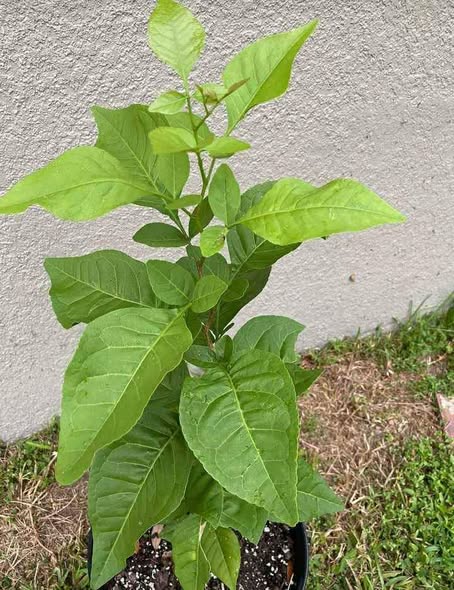
🌿 Botanical Information
Bilva belongs to the family Rutaceae, the citrus family. Its scientific name is Aegle marmelos.
The tree is adapted to warm climates and can tolerate relatively dry conditions. It produces aromatic leaves, fragrant flowers, and a distinctive hard-shelled fruit.
Scientific Classification
- Kingdom: Plantae
- Family: Rutaceae
- Genus: Aegle
- Species: Aegle marmelos
- Common names: Bilva, Bael, Bengal quince, Wood apple
- Plant type: Small to medium-sized perennial tree
🌳 Description of the Bilva Tree
Bilva is a deciduous or semi-deciduous tree with a generally irregular crown and a strong woody trunk.
Young branches may have sharp thorns, while mature branches can become more robust and woody.
The tree produces compound leaves, small fragrant flowers, and large round or oval fruits with a hard outer shell.
🍃 Bilva Leaves
One of the most recognizable features of Bilva is its compound leaves, which commonly consist of three leaflets.
The three-leaflet arrangement has special cultural and religious significance in Hindu traditions.

🌼 Bilva Flowers
Bilva produces small, fragrant flowers that may appear singly or in small clusters.
The flowers are generally greenish-white to pale in appearance and can attract insects that visit them for nectar and pollen.
🍈 Bilva Fruit
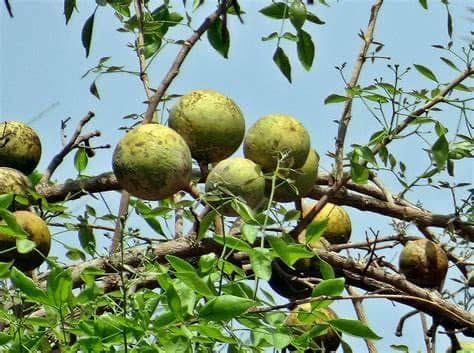
The fruit of Aegle marmelos is one of its most important characteristics.
It is generally round or oval and develops a hard, woody outer shell. When mature, the fruit contains aromatic pulp and numerous seeds.
The fruit is consumed fresh or processed into traditional drinks, preserves, sweets, and other foods.
🌍 Native Region and Distribution
Aegle marmelos is native to the Indian subcontinent and has a long history of cultivation and use across South Asia.
It is also grown in other tropical and subtropical regions where environmental conditions are suitable.
The tree can be found in home gardens, farms, religious sites, orchards, and natural or semi-natural landscapes.
📜 History and Cultural Importance
Bilva has been associated with South Asian culture for centuries. Its fruit has been used as food and traditional plant material, while its leaves have particular religious significance.
The tree is especially important in Hindu traditions and is often cultivated near temples and other sacred places.
Its cultural importance has helped preserve and cultivate Bilva trees across many regions.
🕉️ Bilva in Hindu Tradition
Bilva is one of the most important sacred trees in many Hindu traditions.
🍃 Sacred Bilva Leaves
Bilva leaves, particularly the characteristic three-leaflet form, are traditionally offered to Lord Shiva during worship. Religious practices and interpretations vary among Hindu communities and regions.
The tree and its leaves are especially associated with Shiva worship and festivals such as Maha Shivaratri.
Because of its religious importance, Bilva is commonly planted around temples and maintained as a sacred tree.
🌿 Religious Symbolism of the Three Leaflets
The three leaflets of the Bilva leaf have been given various symbolic interpretations within Hindu traditions.
These interpretations connect the three-part leaf with different religious concepts and attributes associated with Shiva.
Religious symbolism can differ between scriptures, schools, regions, and communities. The three-leaflet structure is, however, widely recognized as an important feature of Bilva in Hindu worship.
🌿 Traditional Uses
Different parts of Bilva have been used traditionally in South Asian systems of plant knowledge.
Traditional preparations have involved the fruit, leaves, bark, roots, and other plant parts.
Traditional plant uses represent historical and cultural knowledge. They should not automatically be considered proven medical treatments.
🥤 Bilva as Food
The mature fruit is an important traditional food resource in parts of South Asia.
The aromatic pulp may be used to prepare beverages, preserves, desserts, jams, and other traditional foods.
Bael drinks are particularly popular in some regions during warm weather.
❤️ Health Research
Aegle marmelos has been investigated in nutritional, phytochemical, and pharmacological research.
Researchers have studied different parts of the plant for antioxidant, antimicrobial, anti-inflammatory, and other biological activities.
However, laboratory and experimental findings do not automatically establish medical benefits in humans. More high-quality clinical research is needed to determine the effectiveness and safety of specific preparations.
🧪 Chemical Constituents
Bilva contains a variety of naturally occurring plant compounds. Different parts of the tree have different chemical profiles.
Research has identified compounds belonging to groups such as alkaloids, coumarins, flavonoids, tannins, terpenoids, and other phytochemicals.
The presence of these compounds is an area of scientific research and should not by itself be interpreted as proof of a specific health effect.
🥗 Nutritional Importance
Bael fruit contains carbohydrates, dietary fibre, minerals, and other naturally occurring nutrients.
Its nutritional composition varies according to fruit maturity, variety, growing conditions, and preparation.
Fresh fruit and traditionally prepared Bael products can form part of a varied diet.
🌍 Ecological Importance
Bilva is adapted to warm environments and can contribute to biodiversity in agricultural landscapes, gardens, and natural habitats.
Its flowers provide resources for insects, while its fruit can be consumed by animals capable of accessing the hard-shelled fruit.
As a woody perennial tree, Bilva also contributes to soil stability, shade, and carbon storage.
🐝 Bilva and Wildlife
Bilva flowers can attract insects and other pollinating organisms.
The fruit provides a food resource for some animals, while the tree itself can provide shelter and habitat for insects and other organisms.
🌱 Cultivation
Bilva grows well in warm climates and is known for its ability to tolerate relatively dry conditions once established.
It performs best with adequate sunlight and well-drained soil, although it can tolerate a range of soil conditions.
Because the tree can develop a substantial crown and may have thorny branches, sufficient space should be provided when planting.
🌱 Propagation
Bilva can be propagated from seeds and through vegetative techniques used in horticulture.
Seed-grown plants can take time to mature and produce fruit, while selected cultivated varieties may be propagated using techniques such as budding or grafting.
☀️ Climate and Growing Conditions
Bilva is well adapted to tropical and subtropical climates.
It prefers warm conditions and good sunlight. Once established, mature trees can tolerate periods of relatively low rainfall.
Young plants generally require more consistent moisture while their root systems are developing.
🔎 How to Identify a Bilva Tree
Bilva can be identified by examining several characteristic features of the tree.
- Compound leaves commonly consisting of three leaflets
- Small fragrant flowers
- Round or oval fruits with a hard woody shell
- Aromatic fruit pulp
- Strong woody branches
- Thorns may occur on younger branches
- Small to medium-sized tree growth habit
The combination of the three-part leaves and distinctive hard-shelled fruit is especially useful for identification.
🌿 Bilva and Wood Apple
Bilva is sometimes confused with other fruits that are also commonly called "wood apple." Common names can vary between countries and regions.
Bilva specifically refers to Aegle marmelos. Checking the scientific name is therefore the most reliable way to distinguish it from unrelated plants that share similar common names.
🌍 Environmental Importance
As a perennial tree, Bilva contributes to green cover and can provide shade and habitat in suitable landscapes.
Its flowers and fruits support interactions with insects and animals, contributing to local biodiversity.
Like other trees, Bilva also stores carbon in its woody biomass and contributes to photosynthesis and local environmental regulation.
🌱 Conservation and Protection
Bilva is cultivated widely in South Asia and is valued for both its fruit and cultural significance.
Protecting mature trees and maintaining genetic diversity in traditional fruit trees can help preserve valuable plant resources for future generations.
Sacred trees maintained around temples and communities can also serve as important local sources of biodiversity and traditional plant knowledge.
⚠️ Important Information
Bilva has a long history of traditional use, but traditional use should not be interpreted as proof that a plant preparation can prevent or cure a disease.
Anyone considering concentrated herbal preparations should consult a qualified healthcare professional, particularly when taking medicines or managing a medical condition.
When consuming Bael fruit, use properly identified and appropriately prepared fruit from a clean and safe source.
🌿 Why Is Bilva Important?
Bilva is important because it combines nutritional, botanical, ecological, cultural, and religious value.
- Sacred tree in Hindu traditions
- Bilva leaves are traditionally offered to Lord Shiva
- Produces an important traditional fruit
- Adapted to warm and relatively dry environments
- Provides resources for insects and wildlife
- Has a long history in South Asian plant knowledge
- Valued as both a cultural and fruit-bearing tree
🌿 Bilva at a Glance
- Common name: Bilva / Bael / Bengal Quince
- Scientific name: Aegle marmelos
- Family: Rutaceae
- Plant type: Small to medium-sized perennial tree
- Key identification feature: Compound leaves commonly arranged in groups of three
- Fruit: Hard-shelled round or oval fruit with aromatic pulp
- Religious importance: Sacred in many Hindu traditions
- Food importance: Fruit used in traditional foods and beverages