🌳 Peepal Tree (Sacred Fig)
Ficus religiosa
The Peepal Tree, scientifically known as Ficus religiosa, is a large fig tree native to the Indian subcontinent and surrounding regions. It is one of the most culturally and religiously significant trees in South Asia and is also ecologically important because of its relationship with wildlife.

🌿 Botanical Information
Peepal belongs to the genus Ficus and the mulberry family, Moraceae. It is a large, long-lived tree that can develop an extensive crown and strong branches.
The species is scientifically known as Ficus religiosa. The common name "Sacred Fig" reflects its important cultural and religious associations.
Scientific Classification
- Kingdom: Plantae
- Family: Moraceae
- Genus: Ficus
- Species: Ficus religiosa
- Common names: Peepal, Sacred Fig, Bodhi Tree
- Plant type: Large perennial tree
🌳 Description of the Peepal Tree
The Peepal is a large deciduous or semi-evergreen tree that can develop a broad crown and substantial trunk as it matures.
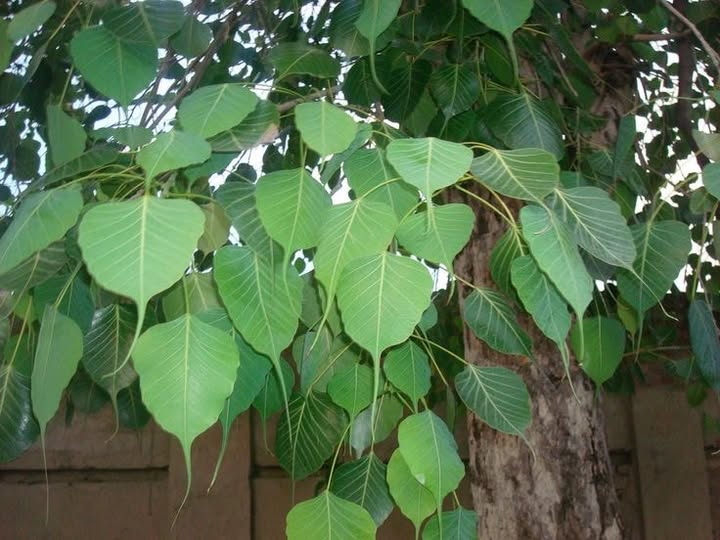
Its leaves are distinctive, usually heart-shaped with a long, narrow tapering tip. The leaves move easily in the wind, creating the characteristic appearance often associated with Peepal trees.
Like other fig species, Peepal produces specialized fig structures that contain its flowers and later develop into small fig fruits.
🌍 Native Region and Distribution
Ficus religiosa is native to parts of South Asia and surrounding tropical regions.
It is widely cultivated and planted in villages, cities, religious sites, gardens, roadsides, and other warm environments.
Because of its cultural importance, Peepal has been deliberately planted and maintained by communities for many generations.
🍃 Peepal Leaves
The leaves are one of the easiest ways to identify a Peepal tree. They are generally heart-shaped and have a remarkably long, pointed tip.
The leaves are attached to relatively long stalks, allowing them to move noticeably even in gentle air currents.
🌱 Flowers and Fig Fruits
Peepal does not produce typical large, visible flowers like many ornamental flowering plants.
Instead, its flowers are located inside specialized structures called syconia, which develop into the fig-like fruits.
The small fruits can provide food for birds and other animals, contributing to the ecological importance of the tree.
📜 History and Cultural Importance
The Peepal tree has been associated with human communities in South Asia for thousands of years.
Its significance extends beyond botany because the tree has become deeply connected with religious traditions, sacred places, village life, and cultural practices.
Ancient trees are sometimes preserved as community landmarks and places for reflection, worship, and gathering.
🕉️ Peepal in Hindu Tradition
The Peepal tree is considered sacred in many Hindu traditions.
🌳 Sacred Tree
Peepal is traditionally associated with several Hindu deities and is regarded by many devotees as a sacred tree. Religious practices surrounding the tree vary between communities and regions.
In some traditions, people visit Peepal trees for prayer, meditation, offerings, or other devotional practices.
☸️ Peepal and Buddhism
The Peepal tree has profound importance in Buddhist tradition.
The tree associated with the Buddha's enlightenment at Bodh Gaya is known as the Bodhi Tree and belongs to the species Ficus religiosa.
☸️ The Bodhi Tree
According to Buddhist tradition, Siddhartha Gautama attained enlightenment while meditating beneath a tree of this species at Bodh Gaya in present-day India.
Descendants and culturally important specimens of the Bodhi Tree have become important Buddhist pilgrimage sites.
🌿 Peepal in South Asian Religious Traditions
Peepal also appears in the religious and cultural traditions of other South Asian communities.
Its long life, large canopy, and ability to establish itself in unusual locations have contributed to its symbolic importance.
🌿 Traditional Uses
Different parts of the Peepal tree have been used traditionally in South Asian systems of herbal knowledge.
Traditional practices have included the use of leaves, bark, roots, fruits, and latex in various preparations.
Traditional uses represent historical and cultural knowledge. They should be distinguished from treatments that have been established through modern clinical research.
❤️ Health Research
Different parts of Ficus religiosa have been investigated in phytochemical and pharmacological research.
Laboratory and experimental studies have examined antioxidant, antimicrobial, anti-inflammatory, and other biological activities of extracts from different parts of the tree.
Such findings do not automatically demonstrate that Peepal preparations can prevent or treat diseases in humans. More high-quality clinical research is needed to establish specific medical benefits.
🧪 Chemical Constituents
Peepal contains a variety of naturally occurring plant compounds. The chemical profile differs according to the plant part, environmental conditions, and extraction method.
Research has reported groups of compounds including flavonoids, phenolic compounds, tannins, terpenoids, and other secondary metabolites.
The presence of these compounds is an area of scientific research and should not by itself be interpreted as evidence of a specific medical effect.
🌍 Ecological Importance
Peepal is an important ecological resource in environments where it grows naturally or has been established for a long period.
Its fruits can provide food for birds and other fruit-eating animals. These animals can also help disperse the seeds.
Mature trees provide shade, nesting locations, and shelter for various organisms.
🐝 Relationship with Fig Wasps
Like many species of Ficus, Peepal has a specialized ecological relationship with fig wasps.
Fig wasps can pollinate the flowers located inside the fig structure, while the developing figs provide a habitat for the insects during their life cycle.
This relationship is an important example of mutual dependence between plants and insects.
🐦 Peepal and Wildlife
The fruits of Peepal can attract birds and other animals that feed on figs.
Large mature trees can also provide nesting and resting sites for birds and habitat for insects and other organisms.
🌱 Cultivation
Peepal is adapted to warm climates and can grow vigorously under suitable conditions.
Young trees require adequate moisture during establishment. Mature trees can become relatively resilient once their root systems are well developed.
Because Peepal can become a very large tree, it should be planted where there is sufficient space for its trunk, crown, and root system.
🌳 Growth Habit
Peepal can develop a large spreading crown and a substantial trunk when allowed to mature.
The species can sometimes establish itself from seeds deposited by birds in cracks or cavities of buildings and other trees.
Young plants growing in unsuitable locations may eventually cause structural problems as their roots expand, so management can be necessary around buildings and infrastructure.
🌱 Roots and Tree Structure
Mature Peepal trees develop extensive root systems that help support their large crowns.
Like some other fig species, Peepal may produce additional roots under certain environmental conditions, although its growth habit differs from that of species such as the Banyan.
🔎 How to Identify a Peepal Tree
The leaves are the most recognizable feature of Peepal.
- Heart-shaped leaves
- Very long, narrow leaf tips
- Long leaf stalks
- Leaves that move easily in the wind
- Large spreading crown when mature
- Small fig-like fruits
- Greyish or pale bark on mature trees
- Strong, extensive root system
For accurate identification, examine several characteristics together rather than relying on a single leaf feature.
☀️ Environmental Importance
Large Peepal trees can provide shade and contribute to the structure of urban and rural green spaces.
Their foliage, branches, bark, flowers, and fruits create several types of habitat for organisms.
Like other large trees, Peepal also contributes to carbon storage, oxygen production through photosynthesis, and local cooling through shade and evapotranspiration.
🌱 Conservation and Protection
Peepal is widely cultivated and is not generally regarded as a globally rare tree species.
Nevertheless, old trees can have significant ecological and cultural value and may deserve protection as community heritage.
Protecting mature native and culturally significant trees can help preserve biodiversity, shade, habitat, and local cultural history.
⚠️ Important Information
Peepal has a long history of traditional use, but traditional practices should not be interpreted as proof that a plant preparation can prevent or cure a medical condition.
Do not consume herbal preparations made from Peepal without appropriate professional guidance, especially when managing a medical condition or taking medicines.
Peepal trees can become very large. Planting one too close to buildings, underground pipes, walls, or other structures may create maintenance problems as the tree matures.
🌳 Why Is the Peepal Tree Important?
Peepal is important from botanical, ecological, cultural, and religious perspectives.
- Important sacred tree in South Asian traditions
- Species associated with the Buddhist Bodhi Tree
- Provides food and habitat for wildlife
- Supports a specialized relationship with fig wasps
- Provides shade in rural and urban environments
- Has a long history in traditional plant knowledge
- Can become a long-lived community landmark
🌿 Peepal Tree at a Glance
- Common name: Peepal / Sacred Fig
- Scientific name: Ficus religiosa
- Family: Moraceae
- Plant type: Large perennial tree
- Key identification feature: Heart-shaped leaves with long pointed tips
- Religious importance: Sacred in Hinduism and important in Buddhism
- Ecological importance: Food and habitat for birds, insects, and other wildlife