🌿 Durva Grass
Cynodon dactylon
Durva Grass is a perennial grass known scientifically as Cynodon dactylon. It is a hardy, spreading grass found across many warm regions of the world and is valued for its ecological, agricultural, cultural, and traditional importance.
🌿 Botanical Information
Durva Grass, Cynodon dactylon, belongs to the grass family, Poaceae.
It is a perennial grass that spreads through creeping stems called stolons and underground stems called rhizomes. These structures allow the plant to establish itself rapidly and recover after cutting or grazing.
Scientific Classification
- Kingdom: Plantae
- Family: Poaceae
- Genus: Cynodon
- Species: Cynodon dactylon
- Common names: Durva Grass, Bermuda Grass
- Plant type: Perennial grass
🌱 Description of Durva Grass
Durva Grass is a low-growing perennial grass that forms a dense mat when growing under suitable conditions.
Its narrow green leaves arise from creeping stems. The plant can spread horizontally across the soil surface and develop roots at nodes along its stolons.
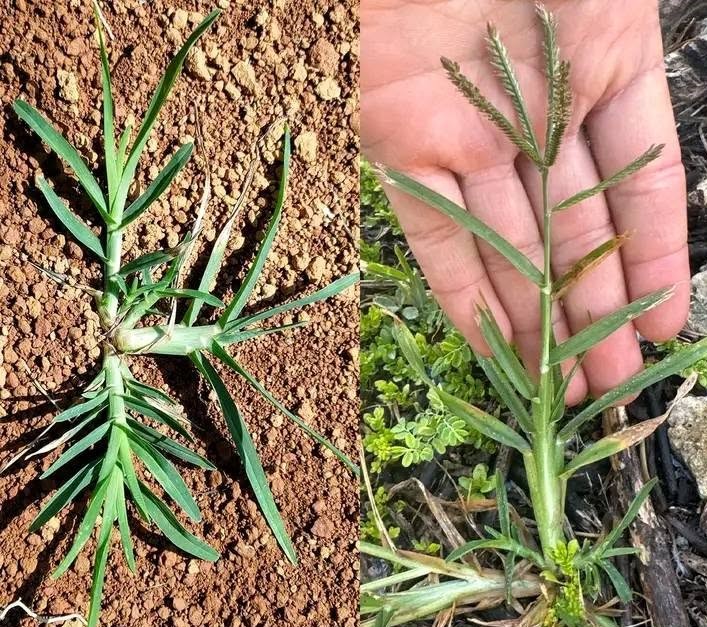
The flowering stems are usually upright and terminate in several slender spikes arranged in a distinctive finger-like pattern.
🌍 Native Region and Distribution
Cynodon dactylon has a very broad natural and introduced distribution across warm regions of the world.
It occurs in parts of Africa, Asia, Europe, Australia, and the Americas and is particularly successful in warm climates.
The exact limits of its native range can be difficult to determine because the grass has been widely introduced and cultivated.
📜 History and Cultural Importance
Durva Grass has a long history of cultural and traditional importance, particularly in South Asia.
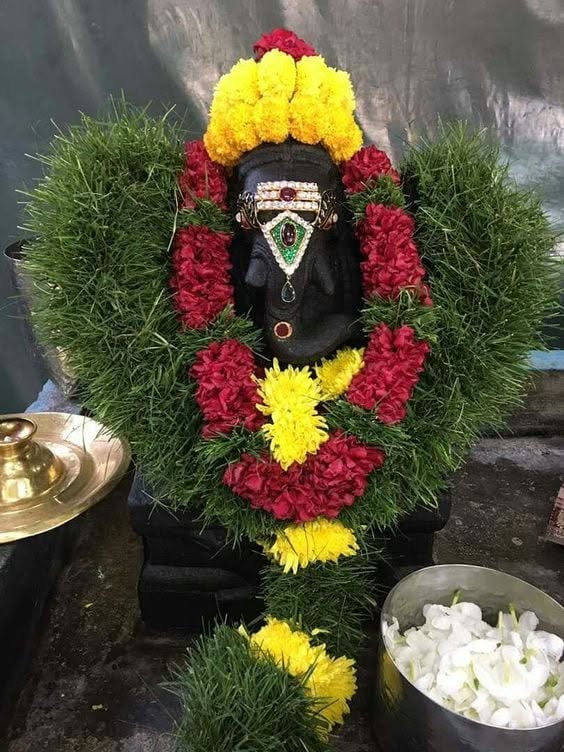
In Hindu traditions, Durva Grass is considered a sacred plant and is especially associated with Lord Ganesha. It is traditionally offered during religious ceremonies and worship.
Cultural Significance
Durva is traditionally regarded as a sacred grass in Hindu culture. It is commonly used in religious offerings and ceremonies, particularly those associated with Lord Ganesha.
🍃 Leaves
Durva Grass has narrow, green leaves that are generally arranged along its creeping stems and shoots.
Leaf size and appearance can vary depending on environmental conditions, moisture, soil fertility, and grazing or mowing.
🌾 Flowers and Seed Heads
The flowering stems of Durva Grass are generally slender and upright.
The inflorescence usually consists of several narrow spikes radiating from the top of the stem, producing a characteristic finger-like appearance.
This distinctive flower-head structure can help distinguish Cynodon dactylon from many other common grasses.
🌱 Roots, Stolons and Rhizomes
One of the most important characteristics of Durva Grass is its extensive spreading system.
Stolons grow horizontally above the ground, while rhizomes can develop below the soil surface. Both structures can produce new shoots and roots.
This growth habit allows the grass to form dense ground cover and makes it highly resistant to repeated mowing and grazing.
🌿 Traditional Uses
Durva Grass has been used in traditional practices in several regions, especially in South Asian systems of traditional knowledge.
Different parts of the plant have been used traditionally in preparations and cultural practices.
Traditional Knowledge
Traditional uses of Durva Grass vary among communities. Traditional applications should be distinguished from scientifically established medical treatments.
❤️ Traditional Health Uses and Research
Cynodon dactylon has been investigated in phytochemical and pharmacological research. Studies have examined extracts of the plant for various biological activities.
Research has reported antioxidant, antimicrobial, anti-inflammatory, and other biological activities in experimental settings.
These findings do not by themselves establish that Durva Grass can prevent or treat diseases in humans. More clinical evidence is needed before making medical claims.
However people some people think that, Cynodon dactylon (Bermuda Grass) can be used medicinally as following:
1. Medicinal Benefits: Used to control blood sugar levels in diabetes. Helps in detoxification and boosting immunity. Useful for wound healing and skin infections. Treats urinary tract infections (UTI).
2. Bermuda Grass Juice Preparation: Take fresh grass and wash it thoroughly. Blend with water and strain the juice. Drink in small amounts for health benefits.
3. Spiritual & Religious Use: Considered sacred in Hindu rituals and offered to Lord Ganesha.
🧪 Chemical Constituents
Durva Grass contains various naturally occurring plant compounds. The composition can differ depending on the plant part, environment, and extraction method.
Research has identified compounds belonging to groups such as flavonoids, phenolic compounds, terpenoids, and other secondary metabolites.
The presence of a particular compound does not necessarily mean that consuming the plant will produce a specific health effect.
🌍 Ecological Importance
Durva Grass can provide ground cover and help protect soil from erosion, particularly where dense grass growth is established.
Its extensive root and stolon system helps bind soil and allows the plant to survive periods of grazing, mowing, and environmental stress.
The grass can also provide habitat and food resources for some insects and grazing animals.
🌾 Agricultural Importance
Cynodon dactylon is widely used as a turf and pasture grass in suitable climates.
Its ability to spread rapidly and tolerate repeated cutting makes it useful for lawns, sports fields, grazing areas, and erosion control.
At the same time, its aggressive spreading habit can make it a difficult weed in agricultural fields and gardens.
🏡 Durva Grass as Turf
Bermuda Grass, another common name for Cynodon dactylon, is widely used for lawns and turf in warm climates.
It can form a dense lawn when supplied with sufficient sunlight, moisture, nutrients, and appropriate maintenance.
Regular mowing encourages dense horizontal growth and can help maintain a uniform turf surface.
🌱 Cultivation
Durva Grass grows best in warm conditions and generally performs well in sunny locations.
It can tolerate a range of soil types and is capable of surviving relatively dry periods once established.
The grass spreads readily through stolons and rhizomes, making vegetative establishment relatively easy.
☀️ Environmental Adaptation
Durva Grass is well adapted to warm environments and can tolerate repeated mowing, grazing, and trampling.
Its underground rhizomes and above-ground stolons help it recover after physical damage.
These characteristics explain why it can survive in lawns, roadsides, fields, gardens, and disturbed areas.
🔎 How to Identify Durva Grass
Durva Grass can often be recognized by its low, spreading growth habit and distinctive flower spikes.
- Low-growing perennial grass
- Narrow green leaves
- Creeping stolons
- Underground rhizomes
- Dense mat-forming growth
- Finger-like arrangement of flower spikes
- Strong ability to recover after mowing or grazing
For accurate identification, examine the leaves, stems, roots, flower heads, growth habit, and habitat together.
🐦 Durva Grass and Wildlife
Grasslands containing Cynodon dactylon can provide food and shelter for insects and other small organisms.
The grass may also be grazed by livestock and wild herbivores.
🌱 Conservation and Management
Durva Grass is widespread and is not generally considered a rare plant. In many regions it is abundant and can spread rapidly.
Its conservation significance therefore differs from that of threatened plant species. In agricultural areas, management may instead be necessary because the grass can compete with crops.
🕉️ Cultural Importance
Durva Grass has special religious importance in Hindu traditions.
It is commonly associated with Lord Ganesha and is traditionally offered during worship and religious ceremonies.
According to the Hindu calendar, the festival of Durva Ashtami is celebrated on the Ashtami date of Shukla Paksha of Bhadrapada month. There is a tradition of worshiping Durva grass on this day. It is believed that worshiping Durva on the day of Durva Ashtami fulfills all the wishes of the Devotees . The religious importance of Durva grass has been told in Hindu culture. Durva grass is very dear to Lord Ganesha who is considered as Lord of prosperity. According to belief when Sumudra manthan was going on , at that time some hairs of Lord's Vishnu Hand fall on the Ground which then took the Form of Durva. It is also said about Durva that when the deities were going to take nectar ( Amrit ) after churning the ocean, few drops of nectar ( Amrit ) fell on Durva. It is believed that worshiping Durva on the day of Durva Ashtami fulfills all the wishes & person becomes prosperous & his family tree increases. So on this Day first worship Durva Grass & then offer it to Lord Shiva & Lord Ganesha. By doing this, Rahu / Ketu problems will also Diminish.
⚠️ Important Information
Durva Grass has many traditional uses, but traditional use should not be interpreted as proof of medical effectiveness.
Herbal preparations can differ considerably in concentration and purity. Anyone considering Durva Grass for a health condition should consult a qualified healthcare professional.
🔬 Why Study Durva Grass?
Durva Grass is important from botanical, ecological, agricultural, cultural, and traditional perspectives.
Its remarkable ability to spread, tolerate disturbance, protect soil, and recover after damage makes it an interesting example of plant adaptation.
Its cultural importance also demonstrates how plants can become deeply connected with human traditions and religious practices.