🌿 Fenugreek
Trigonella foenum-graecum
Fenugreek is an annual herb cultivated for its aromatic leaves and seeds. Known as methi in South Asia, it is widely used as a culinary herb and spice and has a long history of traditional use.
🌿 Botanical Information
Fenugreek, scientifically known as Trigonella foenum-graecum, is a flowering plant belonging to the legume family Fabaceae.
The plant is cultivated mainly for its leaves and aromatic seeds. Fenugreek seeds are commonly used as a spice, while the fresh and dried leaves are used as culinary herbs.
Scientific Classification
- Kingdom: Plantae
- Family: Fabaceae
- Genus: Trigonella
- Species: Trigonella foenum-graecum
- Common names: Fenugreek, Methi
🌱 Description of the Fenugreek Plant
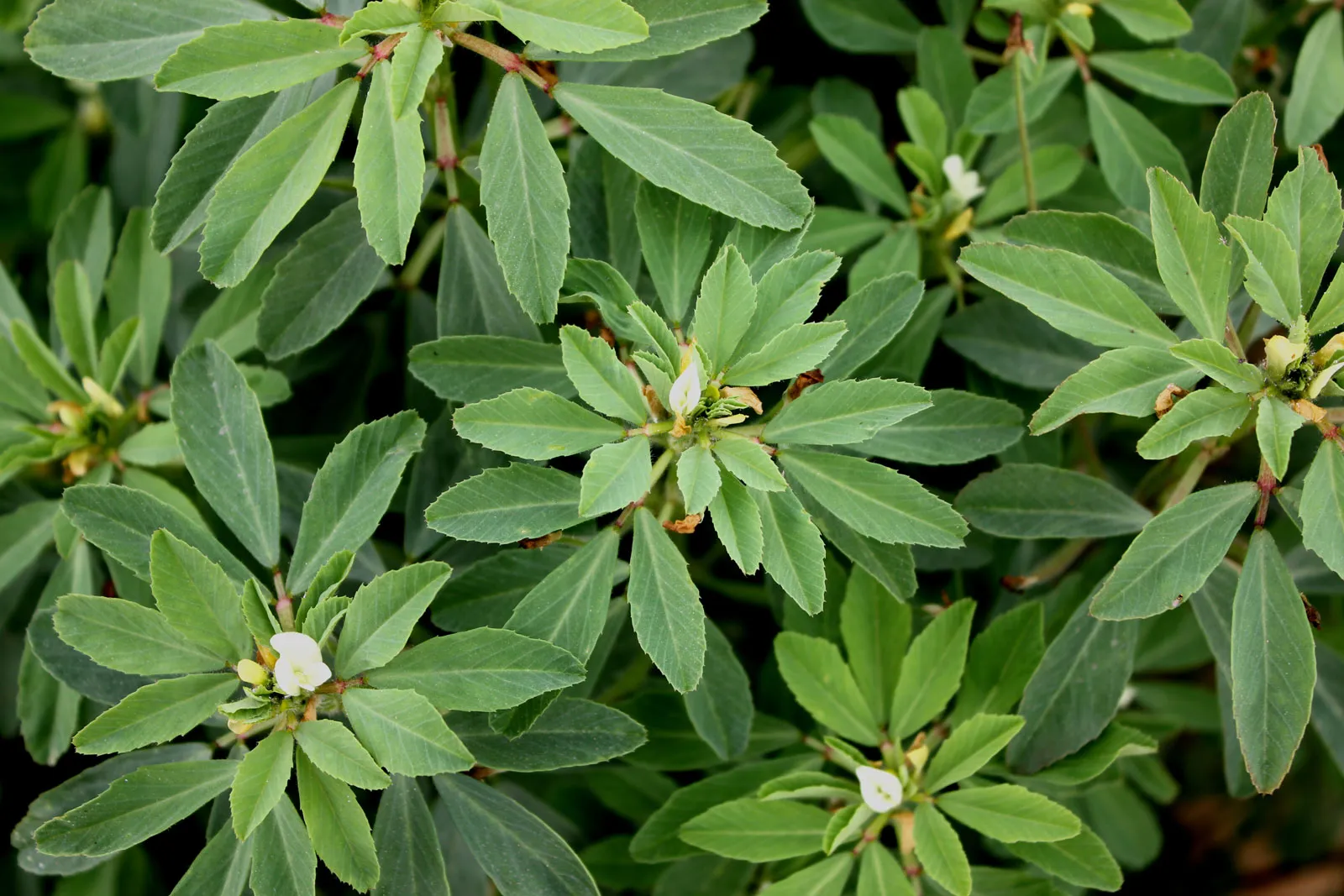
Fenugreek is a small annual herb with upright, branched stems. Its leaves are composed of three small leaflets, giving them a characteristic trifoliate appearance.
The leaflets are generally green and somewhat rounded or obovate. Small pale yellow to whitish flowers develop on the plant and are followed by slender pods containing the seeds.
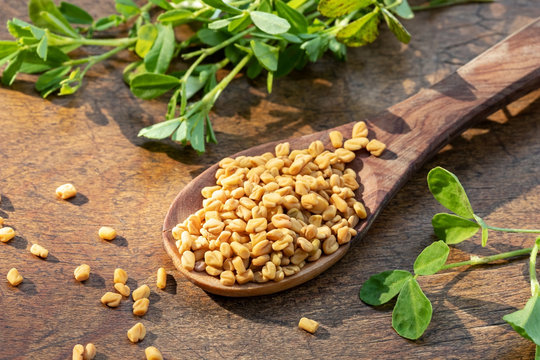
Fenugreek seeds are yellowish-brown to golden brown and have a distinctive strong aroma and slightly bitter taste.
🌍 Native Region and Distribution
Fenugreek is associated with the Mediterranean region, western Asia, and the Indian subcontinent. Because the plant has been cultivated for thousands of years, its exact original distribution is difficult to establish with certainty.
Today, fenugreek is cultivated in many parts of Asia, North Africa, Europe, and other regions where suitable agricultural conditions are available.
The plant generally grows well in relatively dry conditions and prefers well-drained soils with adequate sunlight.
📜 History and Cultural Importance
Fenugreek has been cultivated and used by human societies for a very long time. Its seeds and leaves have been valued as food, flavouring ingredients, and traditional plant preparations.
Fenugreek became particularly important in South Asian, Middle Eastern, and Mediterranean food traditions, where both the leaves and seeds are used in different forms.
The plant is commonly known as methi in South Asian languages and remains an important ingredient in regional cuisines.
🍃 Culinary Uses
Fenugreek is valued as both a leafy vegetable or herb and a spice. The flavour of the leaves differs from that of the mature seeds.
- Fresh fenugreek leaves are used in curries, breads, vegetables, and other dishes.
- Dried fenugreek leaves, commonly known as kasuri methi, are used as an aromatic seasoning.
- Fenugreek seeds are used as a spice in South Asian and Middle Eastern cooking.
- Fenugreek seeds are used in spice mixtures, pickles, curries, and other traditional foods.
- Sprouted fenugreek seeds may also be consumed as food.
🌿 Traditional Uses
Fenugreek has a long history in traditional food and herbal practices. Different cultures have used the seeds, leaves, and other preparations for a variety of traditional purposes.
Traditional Knowledge
Fenugreek seeds and leaves have traditionally been incorporated into food and household herbal preparations. Traditional uses vary between cultures and should be distinguished from effects established through modern clinical research.
Historical or traditional use does not by itself establish that a plant preparation is effective for treating a particular medical condition.
❤️ Nutritional and Health Research
Fenugreek seeds contain dietary fibre, protein, minerals, and various naturally occurring plant compounds. Fenugreek leaves also provide nutrients when consumed as food.
Fenugreek has been investigated in nutritional and biomedical research for a variety of possible biological effects. Research has examined compounds present in the seeds and their potential physiological activities.
Evidence varies according to the preparation, dose, and population studied. Laboratory and preliminary findings should not be treated as proof of a medical treatment.
🧪 Chemical Constituents
Fenugreek seeds contain a complex mixture of naturally occurring compounds, including proteins, dietary fibre, carbohydrates, saponins, alkaloids, flavonoids, and other constituents.
One of the characteristic compounds associated with fenugreek is 4-hydroxyisoleucine, an amino-acid derivative that has been investigated in nutritional and biochemical research.
Fenugreek also contains steroidal saponins and aromatic compounds that contribute to its characteristic flavour and smell.
🌾 Fenugreek Seeds
Fenugreek seeds are small, hard, yellowish-brown seeds with a characteristic bitter and aromatic flavour.
They are commonly roasted, ground, soaked, or used whole depending on the culinary preparation. Fenugreek seeds are an important ingredient in many traditional spice blends.
🍃 Fenugreek Leaves
Fenugreek leaves have a distinctive aromatic flavour and are used fresh or dried in cooking.
Dried fenugreek leaves are particularly valued as a seasoning and are commonly added to curries, breads, sauces, vegetables, and other dishes.
🌱 Cultivation and Agriculture
Fenugreek is relatively easy to cultivate and can be grown as an annual crop. It generally prefers sunny conditions and well-drained soil.
The crop can be grown for either its leaves or its mature seeds. Harvesting time therefore depends on the intended use of the plant.
Fenugreek is also a legume, and like other members of the Fabaceae family, it has a close relationship with soil microorganisms involved in nitrogen cycling.
🌍 Environmental and Agricultural Importance
Fenugreek is an important small-scale and commercial crop in several regions. Its relatively short growing period makes it useful for diverse agricultural systems.
As a member of the legume family, fenugreek contributes to the diversity of agricultural cropping systems and participates in biological processes associated with legumes.
🔎 How to Identify Fenugreek
Fenugreek can be recognized by its small size, trifoliate leaves, slender stems, small pale flowers, and elongated seed pods.
- Three leaflets on each leaf
- Small green annual herb
- Distinctive aromatic smell
- Small pale yellow or whitish flowers
- Long, slender seed pods
- Small yellowish-brown aromatic seeds
⚠️ Important Information
Information on this page is provided for educational purposes only. Traditional uses and descriptions of scientific research should not be interpreted as medical advice.
Concentrated herbal preparations may have different effects from ordinary culinary quantities. People who are pregnant, taking medication, have allergies, or have specific medical conditions should consult a qualified healthcare professional before using concentrated fenugreek preparations.
🔬 Why Study Fenugreek?
Fenugreek is important from botanical, agricultural, culinary, nutritional, ethnobotanical, and historical perspectives.
Studying fenugreek provides an opportunity to understand legume plants, traditional food systems, plant chemistry, agricultural cultivation, and the long relationship between plants and human cultures.