🥥 Coconut Palm
Cocos nucifera
The coconut palm is a tropical plant widely valued for its fruit, edible endosperm, coconut water, oil, fibre, and many other useful products. It also has a long-standing cultural and ritual significance in South and Southeast Asia, including Hindu traditions.
🌿 Botanical Information
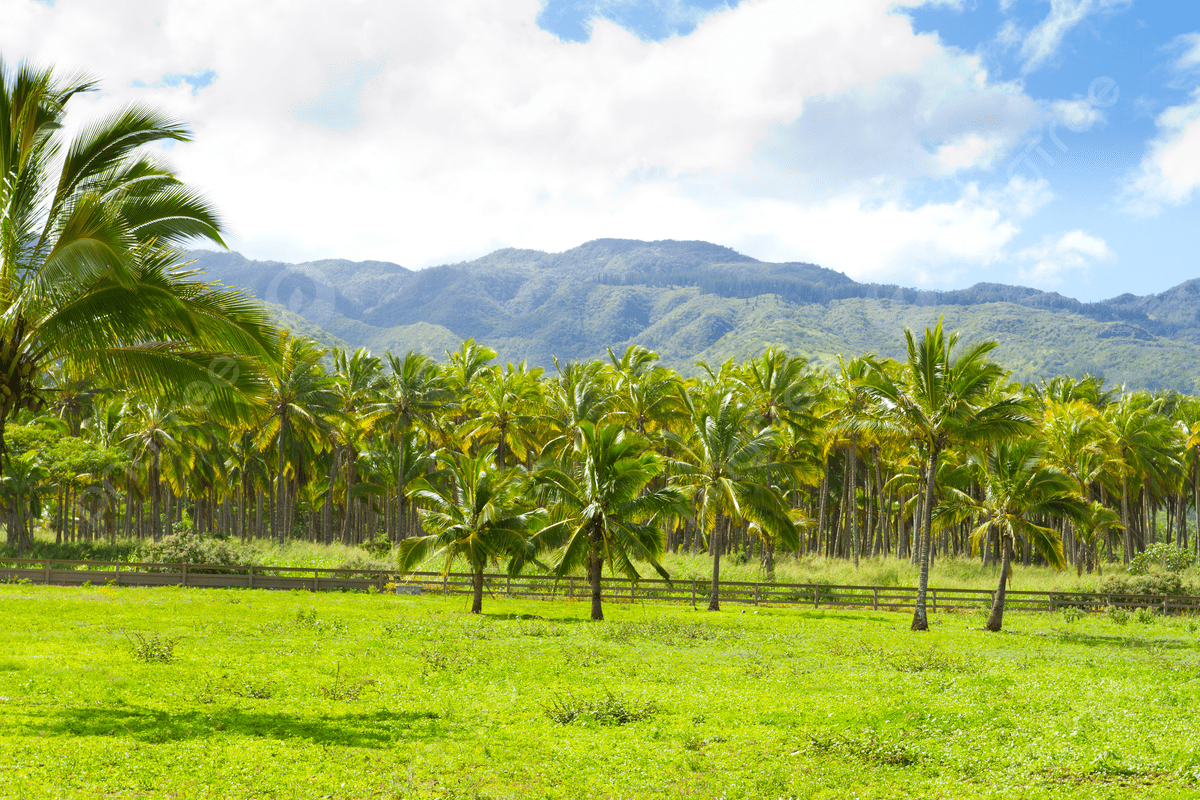
The coconut palm, scientifically known as Cocos nucifera, is a flowering plant belonging to the palm family Arecaceae. It is a tall, evergreen tropical palm recognized by its slender trunk and large crown of long, feather-like leaves.
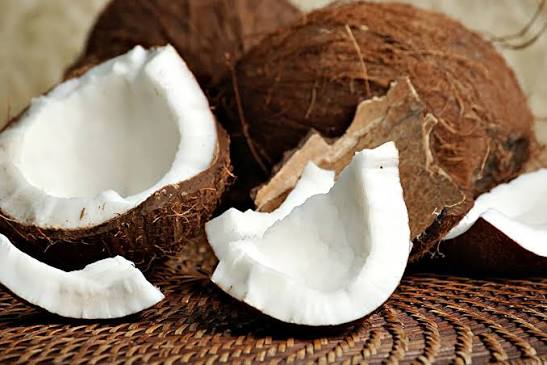
The plant produces large fruits commonly called coconuts. The fruit has a fibrous outer layer surrounding a hard shell, inside which is coconut water and the white edible kernel.
Scientific Classification
- Kingdom: Plantae
- Family: Arecaceae
- Genus: Cocos
- Species: Cocos nucifera
- Common name: Coconut
🌴 Description of the Coconut Palm
Coconut palms usually have a single, unbranched trunk that can become tall and slightly curved. The trunk is marked by leaf scars left as older leaves fall away.
The leaves form a large crown at the top of the trunk. Individual leaves are pinnate, meaning that many narrow leaflets are arranged along a central stalk.
Coconut fruits vary in size and shape. Young coconuts are generally green or yellowish, while mature fruits develop a thick fibrous husk and a hard inner shell.
🌍 Native Region and Distribution
The precise original native range of the coconut palm has been debated because the plant has been cultivated and transported by people across tropical regions for a very long time.
Coconut palms are now widely grown throughout tropical coastal and island regions of Asia, the Pacific, Africa, the Caribbean, and parts of Central and South America.
The species grows particularly well in warm, humid climates and is strongly associated with sandy coastal environments, although it is also cultivated inland where conditions are suitable.
📜 History and Cultural Importance
Coconut has been an important food and useful plant in tropical societies for centuries. Its fruit, oil, fibre, leaves, wood, shells, and other parts have been used for food, household materials, agriculture, construction, crafts, and trade.
Because almost every major part of the plant can be put to use, the coconut palm has sometimes been described as a highly versatile tropical crop.
Coconut also has important cultural and ritual associations in South Asia. In Hindu practice, a whole coconut is commonly used in ceremonies, offerings, religious observances, and auspicious occasions.
🕉️ Coconut in Hindu Traditions
The coconut has a prominent place in many Hindu cultural and religious practices. It is commonly offered during puja and other ceremonies and may be placed on a kalasha during religious rituals.
Cultural and Ritual Significance
In many Hindu traditions, a whole coconut is presented as an offering and is associated with purity, auspiciousness, prosperity, and the symbolic offering of oneself to the divine. The exact interpretation can vary among regions and traditions.
Coconut is therefore important not only as a botanical and food crop but also as a culturally significant plant in the Indian subcontinent.
🥥 Coconut Fruit
Botanically, the coconut fruit is a type of fibrous one-seeded fruit. The outer husk contains strong fibres, while the hard shell protects the inner seed.
Inside a mature coconut is the white edible kernel, commonly called coconut meat. Young coconuts contain a larger quantity of liquid known as coconut water and have softer developing flesh.
❤️ Nutritional and Health Research
Coconut products provide several nutrients, although their nutritional composition differs substantially between coconut water, fresh coconut meat, dried coconut, and coconut oil.
Coconut meat contains dietary fibre and fat, while coconut water contains water, naturally occurring sugars, and minerals. Coconut oil is particularly rich in saturated fatty acids.
Scientific research continues to examine coconut products and their possible nutritional and physiological effects. Evidence should be considered separately for each coconut product rather than treating all coconut preparations as nutritionally identical.
🍃 Traditional Uses and Applications
- Coconut flesh is eaten fresh or used in cooking and food preparation.
- Coconut water is consumed as a beverage.
- Coconut oil is used in cooking and in a variety of traditional household and cosmetic applications.
- Coconut fibre, known as coir, is used to make ropes, mats, brushes, and other products.
- Coconut shells can be used for crafts, household items, and other practical purposes.
- Coconut leaves have traditionally been used for thatching, weaving, and other purposes in tropical communities.
🧪 Chemical Constituents
Different parts of the coconut contain different naturally occurring compounds. Coconut meat contains lipids, proteins, carbohydrates, dietary fibre, minerals, and other plant constituents.
Coconut oil is dominated by fatty acids, including lauric acid, while coconut water contains electrolytes, sugars, amino acids, and other naturally occurring compounds.
The chemical composition can vary according to coconut variety, maturity, growing conditions, and processing method.
🌍 Environmental and Agricultural Importance
Coconut is an economically important tropical crop for many farming communities. Coconut plantations can provide food, household materials, and agricultural income.
The palm is particularly adapted to tropical coastal environments. Sustainable management is important for maintaining soil, biodiversity, water resources, and long-term agricultural productivity.
⚠️ Important Information
Information on this page is provided for educational purposes only. Traditional uses and descriptions of nutritional or scientific research should not be interpreted as medical advice.
Coconut products are not a substitute for prescribed medical treatment. People with specific medical conditions, allergies, or dietary concerns should consult a qualified healthcare professional.
🔬 Why Study the Coconut Palm?
The coconut palm is important from botanical, agricultural, nutritional, economic, environmental, historical, and cultural perspectives.
Studying coconut provides an opportunity to understand tropical plant adaptation, traditional agriculture, food systems, plant resources, and the relationship between plants and human civilizations.