🌿 Dill
Anethum graveolens
Dill is an aromatic annual herb widely used as a culinary plant. Its delicate leaves and aromatic seeds are valued in food traditions in many parts of Europe, Asia, and the Mediterranean region.
🌿 Botanical Information
Dill, scientifically known as Anethum graveolens, is an aromatic flowering herb belonging to the family Apiaceae, the same plant family that includes carrots, parsley, fennel, and coriander.
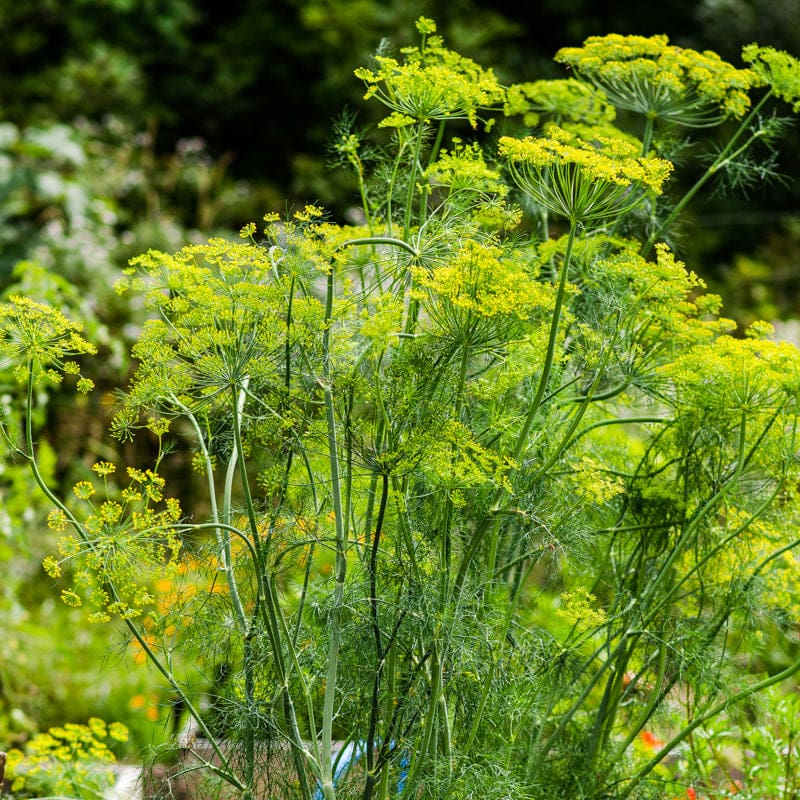
The plant is cultivated mainly for its fragrant leaves and fruits, which are commonly referred to as dill seeds. Dill is an annual herb and produces small yellow flowers arranged in umbrella-like clusters.
Scientific Classification
- Kingdom: Plantae
- Family: Apiaceae
- Genus: Anethum
- Species: Anethum graveolens
- Common name: Dill
🌱 Description of the Dill Plant
Dill is a slender herb that can grow to considerable height under suitable conditions. Its stems are generally smooth and branched, while the leaves are finely divided and have a soft, feathery appearance.
The leaves have a distinctive aromatic fragrance and are commonly harvested while young. As the plant matures, it produces small yellow flowers arranged in compound umbels.
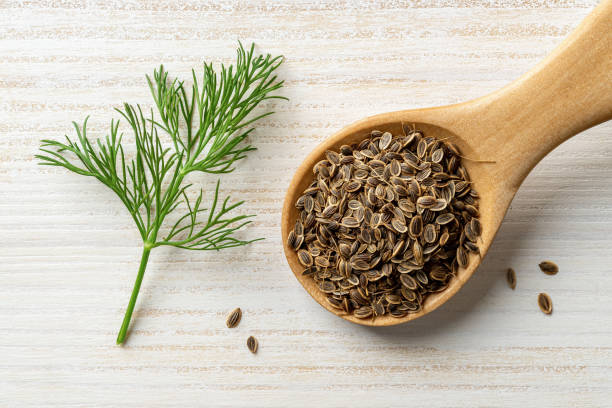
The fruits are small, flattened, and aromatic. They are commonly known as dill seeds and are used as a spice and flavouring ingredient.
🌍 Native Region and Distribution
Dill is associated with southwestern Asia and the eastern Mediterranean region. Because it has been cultivated for a long time, its precise original natural distribution is difficult to separate from its historical cultivation.
Today, dill is cultivated in many countries and can be grown in temperate and subtropical regions where suitable conditions are available.
The plant generally prefers sunny locations and well-drained soil. It is commonly grown in home gardens as well as commercially for culinary use.
📜 History and Cultural Importance
Dill has a long history of use as a culinary and aromatic herb. Historical evidence indicates that dill was known in ancient Mediterranean and Near Eastern cultures.
The plant has traditionally been used to flavour foods, prepare aromatic preparations, and provide a distinctive fragrance to household and culinary products.
Dill remains an important culinary herb in many European, Middle Eastern, Mediterranean, and South Asian food traditions.
🍃 Culinary Uses
Dill leaves and fruits are both used in cooking, although they have different flavours and culinary applications.
- Fresh dill leaves are used to flavour soups, salads, sauces, vegetables, and fish dishes.
- Dill is commonly used in pickling and preservation of vegetables.
- Dill fruits, commonly called dill seeds, are used as a spice.
- Dill leaves may be used fresh, dried, or added near the end of cooking to preserve their aroma.
- Dill is also used in sauces, breads, and traditional regional dishes.
🌿 Traditional Uses
Dill has a long history of traditional use as an aromatic and culinary herb. Different cultures have used dill preparations in traditional food practices and household remedies.
Traditional uses should be distinguished from modern clinical evidence. The presence of historical use does not by itself establish that a plant preparation is effective for treating a medical condition.
Traditional Knowledge
Dill has traditionally been valued for its aromatic properties and has been incorporated into food and household preparations in different cultures.
❤️ Nutritional and Health Research
Fresh dill leaves contain small amounts of vitamins, minerals, dietary fibre, and naturally occurring plant compounds. Because dill is normally consumed in relatively small quantities, it is primarily valued as a flavouring herb rather than a major source of nutrients.
Dill contains various naturally occurring compounds that have been investigated in laboratory and nutritional research.
Scientific research continues to investigate the biological properties of dill and its constituents. Laboratory findings should not automatically be interpreted as proven clinical effects in humans.
🧪 Chemical Constituents
Dill contains a variety of naturally occurring volatile and non-volatile compounds. The composition varies between the leaves, fruits, essential oil, and other parts of the plant.
Important compounds reported in dill include volatile aromatic constituents such as carvone and limonene. The relative amounts can vary according to plant variety, growing conditions, maturity, and processing.
These compounds contribute to the characteristic aroma and flavour of dill and are among the substances studied in botanical and food research.
🌾 Dill Seeds
What are commonly called dill seeds are botanically the dried fruits of the dill plant. They are small, flattened, and aromatic, with a flavour that differs from the fresh leaves.
Dill fruits are commonly used as a spice, especially in pickling, breads, sauces, and other traditional foods.
🧴 Dill Essential Oil
Dill essential oil is obtained from parts of the plant through distillation and contains concentrated volatile compounds.
Its composition depends on the plant material and production method. Because essential oils are concentrated preparations, they should not be treated as equivalent to ordinary culinary use of fresh dill.
🌍 Environmental and Agricultural Importance
Dill is a relatively fast-growing annual herb and can be cultivated in home gardens and agricultural systems. Its flowers can also provide nectar and pollen resources for various insects.
Like other flowering herbs, dill can contribute to garden biodiversity when grown as part of a diverse planting system.
⚠️ Important Information
Information on this page is provided for educational purposes only. Traditional uses and descriptions of scientific research should not be interpreted as medical advice.
Concentrated herbal preparations and essential oils may have different effects from culinary amounts of the plant. People with specific medical conditions, allergies, or dietary concerns should consult a qualified healthcare professional.
🔎 How to Identify Dill
Dill can often be recognized by its slender green stem, finely divided feathery leaves, strong aromatic fragrance, and small yellow flowers arranged in umbrella-shaped clusters.
- Fine, thread-like leaf divisions
- Distinctive aromatic smell
- Slender green stems
- Small yellow flowers
- Small flattened aromatic fruits
🔬 Why Study Dill?
Dill is important from botanical, culinary, agricultural, nutritional, historical, and ethnobotanical perspectives.
Studying dill provides an opportunity to understand aromatic plants, traditional food systems, plant chemistry, agricultural cultivation, and the relationship between plants and human cultures.