🌳 Banyan Tree
Ficus benghalensis
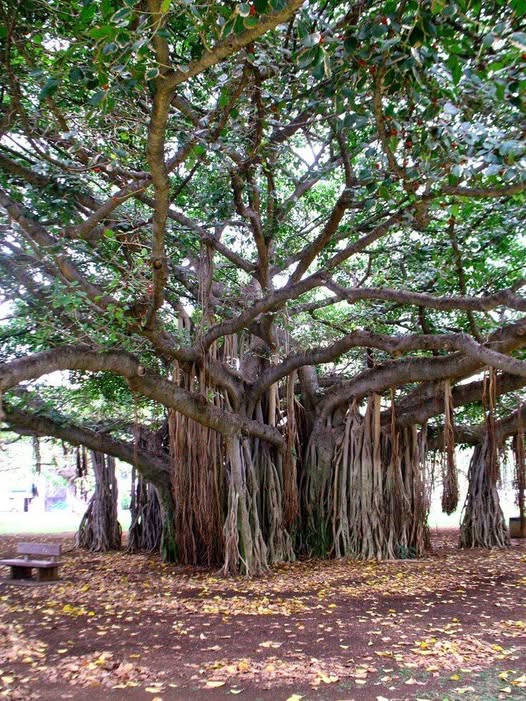
The Banyan Tree, scientifically known as Ficus benghalensis, is a large and long-lived fig tree famous for its extensive canopy and numerous aerial roots. These roots grow downward from branches and can eventually develop into additional supporting trunks.
🌿 Botanical Information
The Banyan belongs to the genus Ficus and the family Moraceae, commonly known as the mulberry or fig family.
It is a large woody tree capable of spreading over a very wide area. Its unusual growth form allows one individual tree to develop what appears to be a small forest of interconnected trunks.
Scientific Classification
- Kingdom: Plantae
- Family: Moraceae
- Genus: Ficus
- Species: Ficus benghalensis
- Common names: Banyan, Banyan Tree, Indian Banyan
- Plant type: Large perennial tree
🌳 Description of the Banyan Tree
The Banyan is a massive tree with a broad crown and a distinctive spreading growth habit.
Its branches can extend horizontally for considerable distances. From these branches, aerial roots develop and grow toward the ground.
When aerial roots reach the soil, they can become thick supporting structures. Over many years, this process allows a single tree to occupy a large area.
🌱 Aerial Roots
Aerial roots are the most distinctive feature of the Banyan Tree. They emerge from branches and grow downward toward the ground.
After reaching the soil, these roots can thicken and become secondary trunks that support the expanding branches.
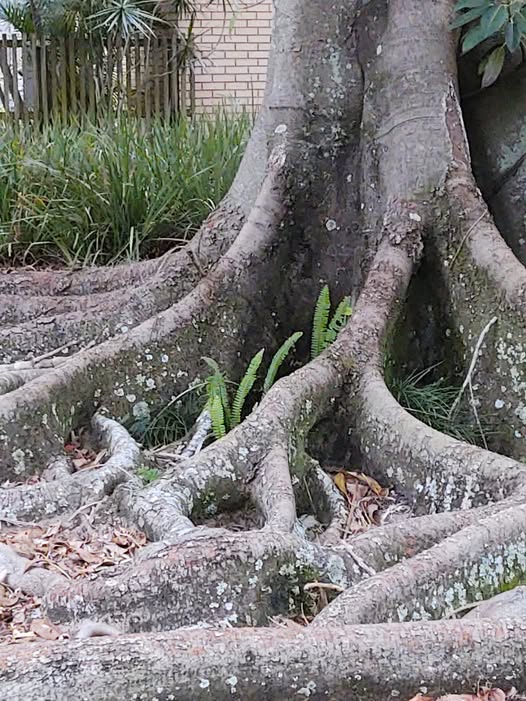
This unusual growth strategy allows a mature Banyan to spread horizontally and form a very large canopy.
🌍 Native Region and Distribution
Ficus benghalensis is native to the Indian subcontinent and parts of tropical South Asia.
It is widely cultivated in tropical and subtropical regions and has also been introduced into other warm parts of the world.
The tree is particularly common around villages, temples, gardens, roadsides, and other places where large shade trees are valued.
🍃 Banyan Tree Leaves
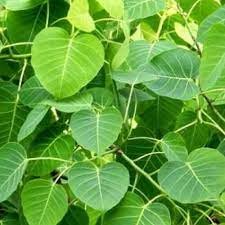
Banyan leaves are generally broad, oval to elliptical, and relatively thick and leathery.
Young leaves may have a lighter colour, while mature leaves are generally green.
Leaf shape and arrangement, together with the aerial roots and overall tree structure, can help distinguish Banyan from other fig species.
🌱 Flowers and Fig Fruits
Like other members of the genus Ficus, the Banyan has specialized structures called syconia that contain its flowers.
These structures develop into small fig-like fruits that can provide food for birds and other animals.
The flowers are not normally visible from the outside because they develop within the fig structure.
🐝 Relationship with Fig Wasps
Banyan trees participate in a highly specialized ecological relationship with fig wasps.
The insects enter the fig structure and interact with the flowers during their reproductive cycle. The relationship between fig species and their pollinating wasps is an important example of plant-insect mutualism.
This specialized relationship contributes to the successful reproduction of many fig species.
📜 History and Cultural Importance
Banyan trees have been closely associated with communities across South Asia for centuries.
Their enormous canopies provide natural shade, making mature Banyans traditional meeting places in many villages and communities.
Because some Banyan trees can live for many decades or longer, particularly old specimens may become important cultural and historical landmarks.
🕉️ Banyan Tree in Hindu Tradition
The Banyan is considered a sacred and culturally important tree in many Hindu traditions.
🌳 Sacred Tree
The Banyan is traditionally associated with longevity, stability, and spiritual significance. Religious practices involving Banyan trees vary according to region and tradition.
Some Hindu traditions associate the Banyan with deities and devotional practices, and mature trees may be protected near temples or other sacred places.
☸️ Banyan in Buddhist and South Asian Culture
Banyan trees and other large fig trees have long been associated with meditation, shade, gathering, and spiritual reflection in South Asian cultures.
It is important to distinguish the Banyan (Ficus benghalensis) from the Peepal or Bodhi Tree (Ficus religiosa), although both belong to the same genus and have important cultural histories.
🌿 Traditional Uses
Various parts of the Banyan tree have been used traditionally in South Asian systems of plant knowledge.
Traditional practices have included the use of bark, leaves, roots, fruits, and latex in different preparations.
Traditional plant uses represent cultural and historical knowledge. They should not automatically be considered proven medical treatments.
❤️ Health Research
Extracts and compounds obtained from different parts of Ficus benghalensis have been investigated in laboratory and experimental research.
Studies have explored antioxidant, antimicrobial, anti-inflammatory, and other biological properties of the species.
However, laboratory or animal findings do not automatically establish medical benefits in humans. More high-quality clinical research is required to determine the safety and effectiveness of specific Banyan preparations.
🧪 Chemical Constituents
Banyan contains a variety of naturally occurring phytochemicals. The exact composition can vary according to the plant part, environment, and preparation method.
Research has identified different groups of compounds, including flavonoids, phenolic compounds, tannins, terpenoids, and other secondary metabolites.
The presence of these compounds is an area of scientific investigation and should not by itself be interpreted as proof of a particular health effect.
🌍 Ecological Importance
Banyan trees can play an important role in tropical ecosystems.
Their fruits provide food for birds, bats, and other animals. Animals that eat the fruits can also contribute to seed dispersal.
Large Banyan trees provide shade, shelter, nesting opportunities, and habitat for numerous organisms.
🐦 Banyan Tree and Wildlife
The fruiting structures of Banyan trees can attract many fruit-eating animals.
Birds and mammals that consume the figs may carry seeds to other locations, helping the tree colonize suitable habitats.
The large branches and complex root structures also provide shelter and living space for insects, birds, reptiles, and other small organisms.
🌱 Cultivation
Banyan trees grow best in warm climates with sufficient sunlight and suitable soil conditions.
Because the species can become extremely large, it requires considerable space for its crown and root system.
It is generally unsuitable for planting immediately beside small buildings, narrow sidewalks, underground infrastructure, or confined gardens.
🌱 Propagation
Banyan trees can reproduce through seeds contained within their fig fruits.
Seeds may be dispersed by animals that consume the fruits. Young Banyan plants can sometimes establish themselves on other trees or structures before developing roots that reach the ground.
Cultivation and propagation methods may vary depending on local climate and horticultural conditions.
🌳 A Unique Beginning
Banyan seedlings can sometimes begin life high in the branches of another tree after seeds have been deposited there by birds or other animals.
The young plant can develop roots that grow downward toward the ground. Once these roots reach the soil, they can become supporting structures as the tree expands.
This growth pattern is one of the most remarkable characteristics of Banyan trees.
🔎 How to Identify a Banyan Tree
A mature Banyan is usually easy to recognize because of its extensive canopy and numerous aerial roots.
- Large spreading crown
- Numerous aerial roots descending from branches
- Aerial roots developing into supporting trunks
- Broad oval or elliptical leaves
- Small fig-like fruits
- Large and long-lived growth habit
- Complex network of branches and roots
For accurate identification, examine leaves, fruits, bark, aerial roots, and overall growth structure together.
☀️ Environmental Importance
Large Banyan trees provide shade and contribute to the structure and biodiversity of tropical green spaces.
Their extensive canopy can create cooler and more sheltered conditions beneath the tree.
Like other large trees, Banyans store carbon in their biomass and contribute to photosynthesis, oxygen production, and local environmental cooling.
🌱 Conservation and Protection
The Banyan is widely cultivated and is not generally considered a globally rare tree.
However, old and exceptionally large Banyan trees can have major ecological, cultural, historical, and educational value.
Protecting mature trees can help preserve habitat, biodiversity, shade, and cultural heritage for future generations.
⚠️ Important Information
Banyan has a long history of traditional use, but traditional use should not be interpreted as proof that a plant preparation can prevent or cure a disease.
Anyone considering concentrated herbal preparations should consult a qualified healthcare professional, particularly when taking medicines or managing a medical condition.
Banyan trees can become extremely large. They should therefore be planted away from buildings, underground utilities, walls, and other structures that may be affected by expanding roots.
🌳 Why Is the Banyan Tree Important?
The Banyan is important because of its unusual biology, ecological value, and cultural significance.
- Provides food for birds and other wildlife
- Supports specialized fig-wasp relationships
- Provides shade and shelter
- Creates habitat for many organisms
- Has major cultural significance in South Asia
- Can become a long-lived community landmark
- Demonstrates a remarkable aerial-root growth strategy
🌿 Banyan vs Peepal
Banyan and Peepal are both members of the genus Ficus, but they are different species with distinct characteristics.
- Banyan: Ficus benghalensis
- Peepal: Ficus religiosa
- Banyan: Famous for extensive aerial roots and supporting trunks
- Peepal: Famous for heart-shaped leaves with long pointed tips
🌿 Banyan Tree at a Glance
- Common name: Banyan Tree / Indian Banyan
- Scientific name: Ficus benghalensis
- Family: Moraceae
- Plant type: Large perennial tree
- Key feature: Extensive aerial roots that can become supporting trunks
- Ecological importance: Food, shelter, and habitat for wildlife
- Cultural importance: Important tree in South Asian traditions